Google has started replacing direct destination links in its search results with google.com/goto redirect URLs, a technical change that can be almost invisible to ordinary users but significant for companies that collect Google Search data at scale.
Google confirmed the rollout on August 26, 2026, saying it regularly deploys “technical measures” to protect its services from evolving forms of abuse. The company did not publicly identify search scrapers, rank trackers, AI companies or any particular service as the target.
Behind the scenes, however, the change is already creating extra work for the systems that read and process Google’s results. DataForSEO says it can resolve the new links on 99.99% of returned SERPs for organic results, while reporting substantially higher unresolved rates in some search features, including AI Overviews.
What Google Actually Changed
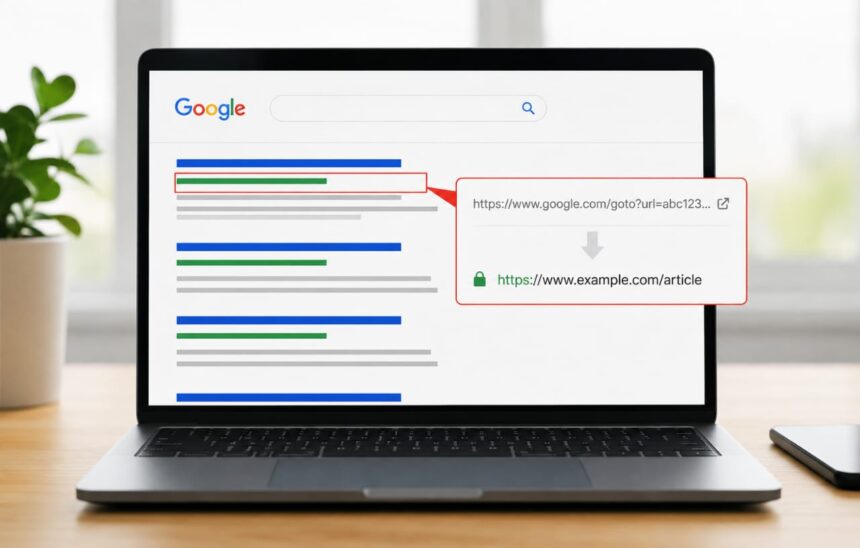
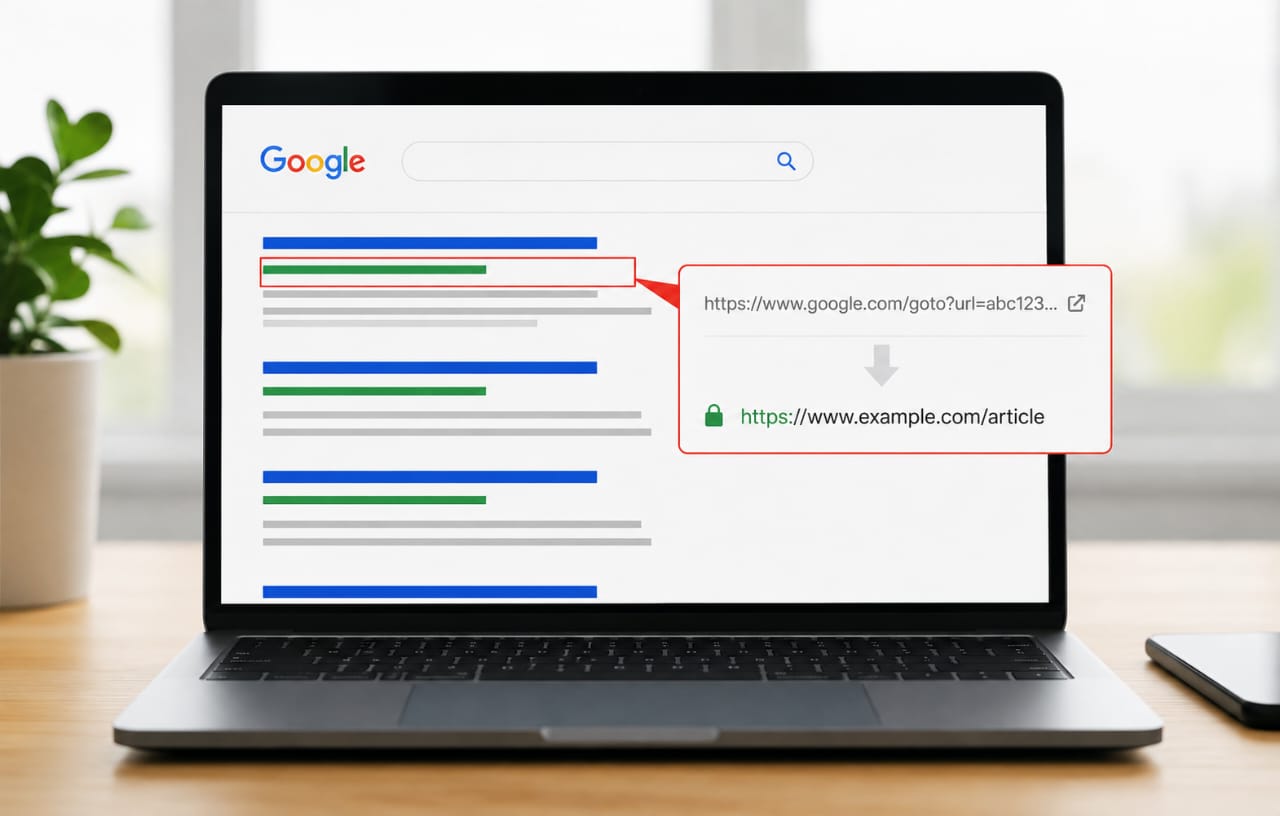
Previously, a Google search result generally pointed straight to the webpage being shown. The browser could read a destination such as example.com/article from the result’s link.
With the new implementation, the clickable link can instead point to a Google address built around google.com/goto. Google then sends the user onward to the actual destination.
For someone searching on a phone or desktop, the experience can feel exactly the same: click a result, and the website opens. The difference is in the request path between Google Search and the destination.
Google Says It Is About Abuse, Not SEO Rankings
Google’s public explanation is deliberately broad. A spokesperson told Search Engine Land that Google has a long history of deploying technical measures against evolving forms of abuse and regularly takes steps to protect its services and users.
That statement is important because it does not say that Google is changing its ranking algorithm. There is currently no evidence that /goto changes where a webpage ranks, how Google indexes it, or whether Google can crawl it.
Instead, the immediate impact is on systems trying to collect information from the search-results page itself.
Why Rank Trackers and SERP APIs Care
A person can click a Google result once. A rank-tracking platform may need to process millions of results every day.
That difference is where the new redirects become interesting.
If a machine receives an opaque Google redirect instead of a direct destination URL, it may need an additional request to resolve where the result actually leads. That adds processing, network traffic and opportunities for rate limits or anti-bot systems to intervene.
PPC Land, citing Nozzle’s observations, reported that resolving the affected links can push a five-page ranking check into roughly 500 to 1,000 requests, depending on implementation and conditions. That is a very different workload from simply parsing the result pages.
This does not mean rank tracking has suddenly stopped working. It means the engineering behind it is becoming more complicated.
The Data Shows a Bigger Problem in AI Overviews
DataForSEO provides one of the clearest snapshots of what is happening. In an August 27 update, the company said Google had widely rolled out google.com/goto across organic search results.
Its system was able to resolve the destination for nearly all organic SERPs, with only 0.01% of returned SERPs containing at least one unresolved goto URL.
The picture was different elsewhere:
- AI Overviews: 52.26% of returned SERPs had at least one potentially unresolved
gotoURL. - Local pack: 25.1%.
- Featured snippets: 0.39%.
- Organic results: 0.01%.
DataForSEO stresses that these figures refer to SERPs containing at least one unresolved URL, not the percentage of every individual link using goto.
This Is Not a Website Redirect You Need to Fix
For publishers and site owners, the practical question is simple: do you need to change anything on your website?
At the moment, no.
You do not need to rewrite your internal links, change your canonical tags, edit robots.txt, add a server redirect or restructure your WordPress installation because Google is using /goto in its own search interface.
Your page can still rank normally and receive visitors normally. The important distinction is that the technical change happens on Google’s side of the click.
Could This Be About Scraping and AI?
There is a reasonable connection to the broader fight over automated access to Google Search, but this is where headlines can outrun the evidence.
The new mechanism clearly makes large-scale extraction of search-result destinations more difficult. At the same time, Google has been involved in legal disputes around automated collection of search data, including its case against SerpApi.
That makes it tempting to say Google introduced /goto specifically to block AI companies or rank trackers. Google has not said that.
The defensible conclusion is narrower: the change is consistent with Google’s broader effort to make automated abuse harder, but the company has not publicly named a specific target for this rollout.
What SEO Teams Should Watch Now
The biggest risk is not suddenly losing rankings. It is misreading the data used to measure those rankings.
If a third-party tracking platform has trouble resolving Google’s new links, dashboards could temporarily show missing domains, incorrect destinations or gaps in historical reporting. That is a tooling problem, not necessarily a Google ranking problem.
For that reason, SEO teams should compare significant ranking movements across more than one source and keep an eye on Google Search Console alongside third-party tracking tools.
The Bigger Picture
Google’s /goto rollout looks small because most people will never notice it.
Technically, though, it represents another layer between Google’s search index and the machines trying to interpret its results. The company is not removing the websites from Search. It is changing how the links are delivered.
That distinction is likely to become increasingly important as Search fills with AI Overviews, AI Mode and other dynamic features. The more Google turns Search into a controlled application rather than a simple page of links, the harder it becomes for outside systems to treat the SERP as a clean, static data source.
For website owners, there is no emergency fix to make. For the companies that measure, scrape and analyze Google Search at scale, however, this is another reminder that the technical shape of the SERP can change even when the search experience looks almost identical.
References for Further Reading
- Search Engine Land: Google confirms deploying goto URL redirects to search results links
- DataForSEO: Google’s Goto Rollout
- PPC Land: Google forces rank trackers into hundreds of additional requests

Discover more from Aree Blog
Subscribe now to keep reading and get access to the full archive.