ERP.io has launched an AI-native enterprise resource planning and customer relationship management platform that combines business applications with artificial intelligence, targeting small and mid-market companies.
The company announced the platform on August 30, 2026, from Bentonville, Arkansas. ERP.io says the system is designed to place AI within everyday business operations rather than adding AI as a separate feature to an existing ERP system.
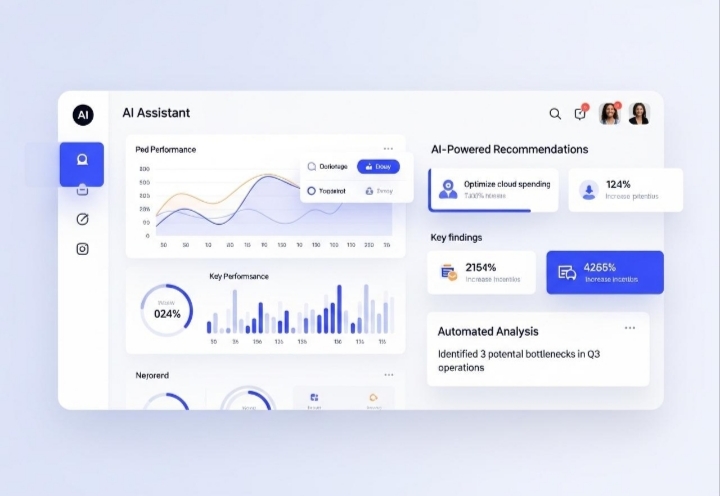
According to the announcement, the platform brings CRM, financial management, project management, workflow automation, reporting, analytics and AI into a unified environment.
ERP.io says its platform is built around a shared business data and intelligence layer. The aim is to give AI access to information across different parts of a company instead of restricting it to an individual application.
The company says the CRM component can manage leads, accounts, contacts, opportunities, pipelines and customer activity. Sales functions include lead routing, follow-ups, pipeline management and forecasting.
The platform also includes financial management features covering invoices, payments, expenses and other financial activity. ERP.io says accounts payable and accounts receivable workflows are included as well.
Project management capabilities cover projects, tasks, milestones, teams, budgets and deliverables, while the operations component is intended to support repeatable internal workflows.
Reporting and analytics tools are also part of the platform, including dashboards, reports, forecasts and performance views. ERP.io says businesses can connect the system with existing applications, data sources, communications platforms and other third-party services.
The company is also positioning natural-language interaction as an important part of the platform. Users can ask questions about business information instead of manually moving through multiple reports and dashboards.
Examples given in the announcement include identifying customers with invoices more than 30 days overdue, finding sales opportunities most likely to close during the month, identifying projects that are running over budget and preparing weekly operating reports.
ERP.io is also describing a broader role for AI agents. The company says its objective is to move beyond systems that simply answer questions toward AI that can perform authorised, multi-step business processes.
Potential use cases described by the company include identifying overdue receivables and initiating collection workflows, finding stalled sales opportunities and creating follow-up actions, detecting declining customer activity, generating management reports and flagging projects that could exceed their budgets.
However, the announcement does not establish that every one of these autonomous workflows is already available as a fully independent capability at launch. Some of the more autonomous agent functions are presented as part of ERP.io’s longer-term direction.
The company’s approach is built around combining operational information that is often spread across separate systems. A customer record, for example, could include sales activity, proposals, contracts, invoices, payments, projects, support activity, communications and profitability information within the same environment.
ERP.io argues that this wider context can give AI more information when analysing business activity or recommending actions.
The company is targeting small and mid-market organisations that need business management software without the complexity and implementation demands commonly associated with larger enterprise ERP systems.
ERP.io says the platform can serve organisations across professional services, agencies, software, manufacturing, distribution, construction, financial services, ecommerce and technology.
The company also says businesses can adopt the modules they need while keeping them connected through the underlying unified platform.
ERP.io was founded by Nate Nead. The company identifies Timothy Carter as chief revenue officer and Samuel Edwards as chief marketing officer.
The announcement presents the product as a move toward an ERP system that can act as both a system for storing business information and a layer for analysing that information and carrying out authorised workflows.
That distinction is central to the company’s AI strategy. Instead of limiting AI to a conversational interface, ERP.io wants its agents to operate with access to structured business data and existing workflows.
For now, however, the available evidence is primarily based on ERP.io’s own product announcement and syndicated versions of that announcement. Independent evidence about the platform’s real-world performance, customer adoption, pricing, underlying AI models, security certifications, uptime, implementation times, funding, revenue or production deployments was not established in the research used for this report.
Business Insider’s market listing carries the announcement as a press release, while StreetInsider’s publication of the release identifies it as paid press-release content.
The launch therefore represents a new entrant’s stated push to combine ERP and CRM functions with AI agents inside a single business platform, while questions about the platform’s deployment, adoption and demonstrated capabilities remain open.

Discover more from Aree Blog
Subscribe now to keep reading and get access to the full archive.