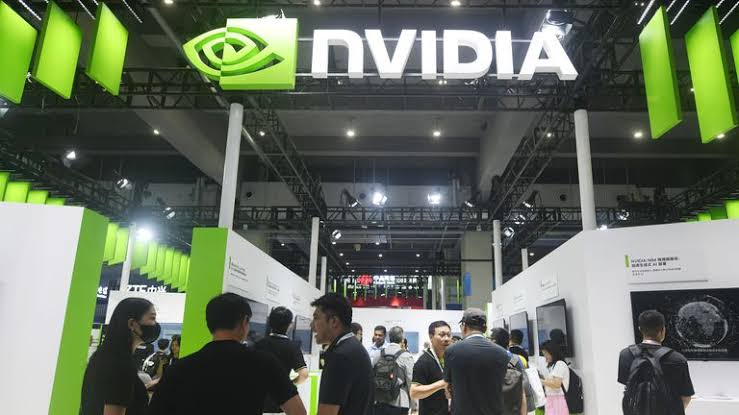
The U.S. Department of Justice is investigating Nvidia’s deal with artificial intelligence chip startup Groq over concerns that the transaction may have been structured to avoid antitrust review, according to reporting published September 9, 2026.
The investigation was first reported by The New York Times, while Reuters reported the development after reviewing the same allegations. Reuters said it could not independently verify the New York Times report.
According to the reports, the DOJ began looking into the arrangement after Nvidia and Groq announced it in December 2025. The agency has since sent Nvidia a formal request for information about the transaction.
The investigation does not concern a conventional acquisition of Groq. Nvidia did not purchase Groq’s shares or take ownership of the company.
Instead, the companies announced a non-exclusive license for Groq’s inference technology while Nvidia hired Groq founder and CEO Jonathan Ross, President Sunny Madra and other members of the company’s team.
Groq remained an independent company under the agreement. Simon Edwards, who had been Groq’s chief financial officer, became its chief executive, while GroqCloud continued operating.
That structure has drawn scrutiny because Nvidia obtained access to Groq’s technology and many of the people responsible for developing it without formally acquiring the startup.
The arrangement has been described by critics as a “reverse acquihire,” a structure in which a large company obtains key employees and technology from a smaller company while leaving the smaller company formally independent.
Nvidia’s own filings provide further detail on the size and structure of the transaction. In a filing with the U.S. Securities and Exchange Commission, Nvidia reported $13 billion paid at closing and another $4 billion, including imputed interest, payable within one year.
The filing also shows that Nvidia recorded $14.4 billion in goodwill and $2.5 billion as a developed-technology intangible asset.
Nvidia stated that the transaction did not include Groq customer contracts, existing products or equity interests. The company characterized the arrangement as a non-exclusive technology license and the hiring of certain Groq employees.
Those figures help explain why recent reporting has referred to the transaction as a $17 billion deal, even though earlier reports commonly described it as a roughly $20 billion agreement.
Groq told shareholders that the licensing arrangement was expected to provide approximately $17 billion in cash payments from Nvidia across three installments by the end of 2026.
A first payment of about $7.6 billion was distributed to shareholders at roughly $64 per share, according to reporting by The Information.
The transaction has attracted attention because of Groq’s position in AI inference hardware.
Groq developed specialized processors designed for inference, the stage in which trained artificial intelligence systems generate responses and perform tasks for users.
Nvidia has a dominant position in high-end AI computing, while Groq pursued a different hardware approach focused on inference performance.
Senators Elizabeth Warren and Richard Blumenthal said Nvidia controls about 90% of the high-end GPU market and argued that specialized inference chips such as Groq’s could provide an alternative for customers.
In a March 2026 investigation, the senators questioned whether Nvidia’s transaction with Groq was designed to avoid antitrust scrutiny.
They also raised concerns that Nvidia’s recruitment of Ross, Madra and other key employees could reduce Groq’s ability to remain an independent competitor, even though the technology license was described as non-exclusive.
The lawmakers had already raised wider concerns about similar transactions before opening their specific investigation into Nvidia and Groq.
On February 4, 2026, Warren, Blumenthal and Senator Ron Wyden asked the DOJ and Federal Trade Commission to examine what they described as “reverse acqui-hiring” arrangements involving major technology companies and AI startups.
The letter cited Nvidia and Groq alongside transactions involving Meta and Scale AI and Google and Windsurf.
Warren and Blumenthal later sought answers directly from Nvidia Chief Executive Jensen Huang. They asked the company to explain the structure of the Groq transaction and whether it was intended to avoid antitrust review.
The senators also pointed to reports that OpenAI had considered using Groq chips for some inference workloads before the Nvidia transaction but later ended those discussions. They argued that OpenAI subsequently agreed to purchase additional Nvidia chips.
The claims formed part of the senators’ inquiry and were not presented as findings by federal regulators.
Nvidia has since begun integrating Groq technology into its own products.
At Nvidia’s GTC 2026 event, the company announced an inference processor incorporating Groq technology. Warren and Blumenthal said the processor could accelerate AI processing by up to 35 times for certain workloads.
The deal has also changed Groq’s business.
Rather than continuing solely as a competing chip developer, Groq has increasingly focused on AI inference cloud services.
In June 2026, Groq raised $650 million as it expanded its inference-cloud business. In August, the company announced a further $350 million Series A led by Disruptive, valuing Groq at $3.5 billion. Nvidia was among the planned participants in that financing.
Groq said the August financing brought its recent fundraising total to $1 billion. The company also said it operated 13 data centers across North America, Europe, the Middle East and Asia-Pacific and served more than six million developers, Fortune 500 enterprises and thousands of AI-native companies.
That $3.5 billion valuation was below the $6.9 billion valuation Groq reported in a September 2025 funding round, before the Nvidia transaction.
U.S. antitrust authorities can examine transactions beyond the question of whether one company formally purchases another. The DOJ’s Merger Guidelines include scrutiny of transactions that eliminate potential competitors or nascent competitive threats and those that could affect access to important inputs.
The Federal Trade Commission has also examined the competitive effects of major AI partnerships. In a 2025 report, the agency warned that relationships between major technology companies and AI developers could affect access to computing resources and engineering talent, increase switching costs and provide access to sensitive information.
Those principles do not establish that Nvidia violated antitrust law in its agreement with Groq. They provide context for why regulators are examining transactions that combine technology access with the movement of key employees.
The DOJ has not announced a finding that Nvidia broke antitrust law.
Current reporting indicates that the investigation is focused on whether the structure of the transaction allowed Nvidia to obtain the competitive value of Groq without undergoing the type of review that could have applied to a conventional acquisition.
Reuters reported that the DOJ, Nvidia and Groq had not provided additional comment on the latest report at the time of publication. Nvidia has previously defended the arrangement and said the transaction reflected a system designed to promote innovation, reward entrepreneurs and benefit consumers.
The agency could ultimately close the investigation without enforcement action. Other possible outcomes include a settlement, financial penalties or other remedies, although current reporting indicates that regulators are not expected to seek to unwind the transaction itself.
The investigation remains ongoing, and no final conclusion has been announced.

Discover more from Aree Blog
Subscribe now to keep reading and get access to the full archive.