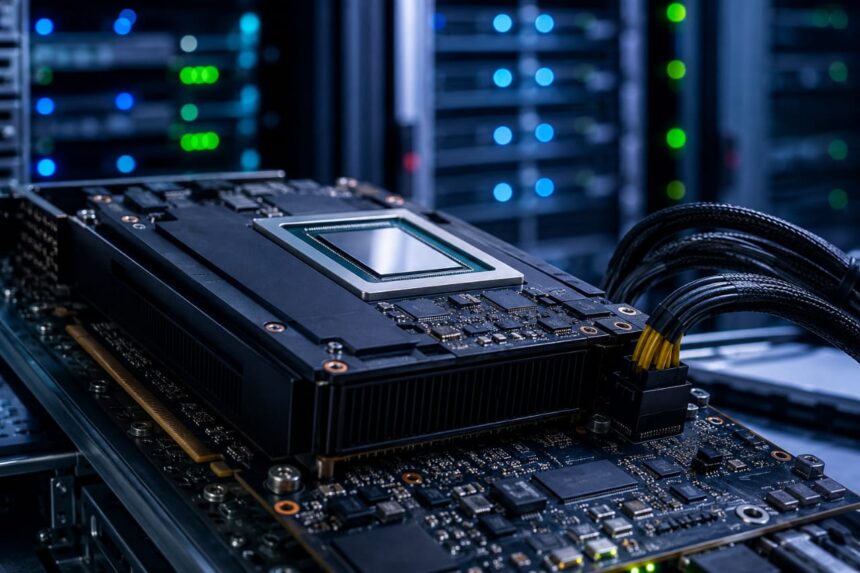
Latency is where production AI either feels sharp or starts to drag. AWS says its Inferentia2 can deliver up to 10× lower latency than Inferentia1, and Google Cloud positions TPU v5e serving around latency-sensitive workloads.
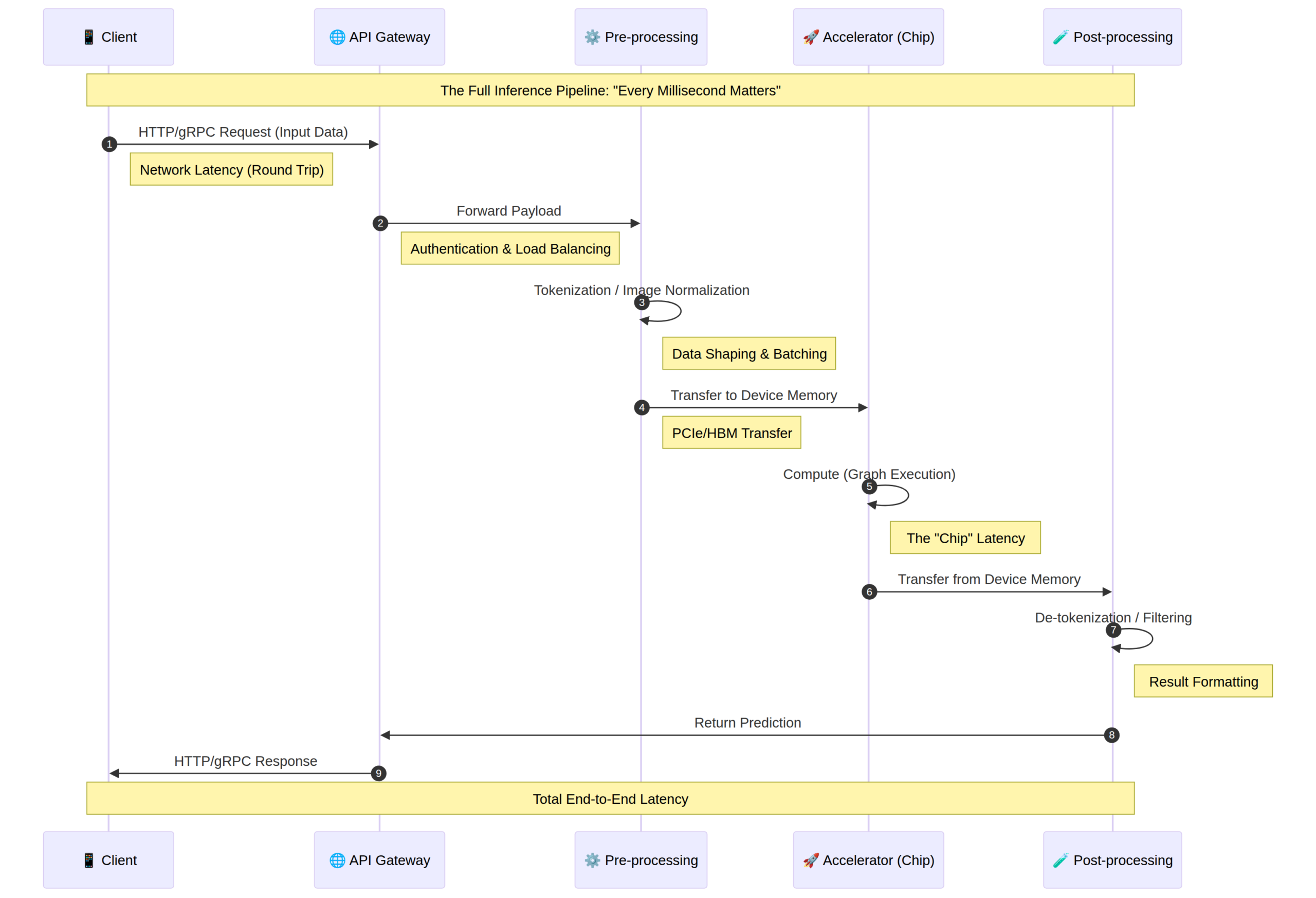
In production, latency is a pipeline problem. A request can stall in preprocessing, queueing, memory access, communication between devices, or post-processing before the model even becomes the bottleneck. The chip matters, but so do the runtime and the path around it.
Latency is Not One Thing
For a support chatbot, a recommendation engine, or a fraud detector, users do not care where the delay came from. They only feel the pause. That is why modern inference stacks are built around the whole path from request to response.
Google’s TPU documentation makes this mindset explicit: TPUs are custom ASICs built to accelerate machine learning workloads, and serving jobs are tuned for latency. That separation matters because production inference rarely behaves like training. It is smaller, burstier, and far less forgiving of overhead.
What Accelerators do Differently
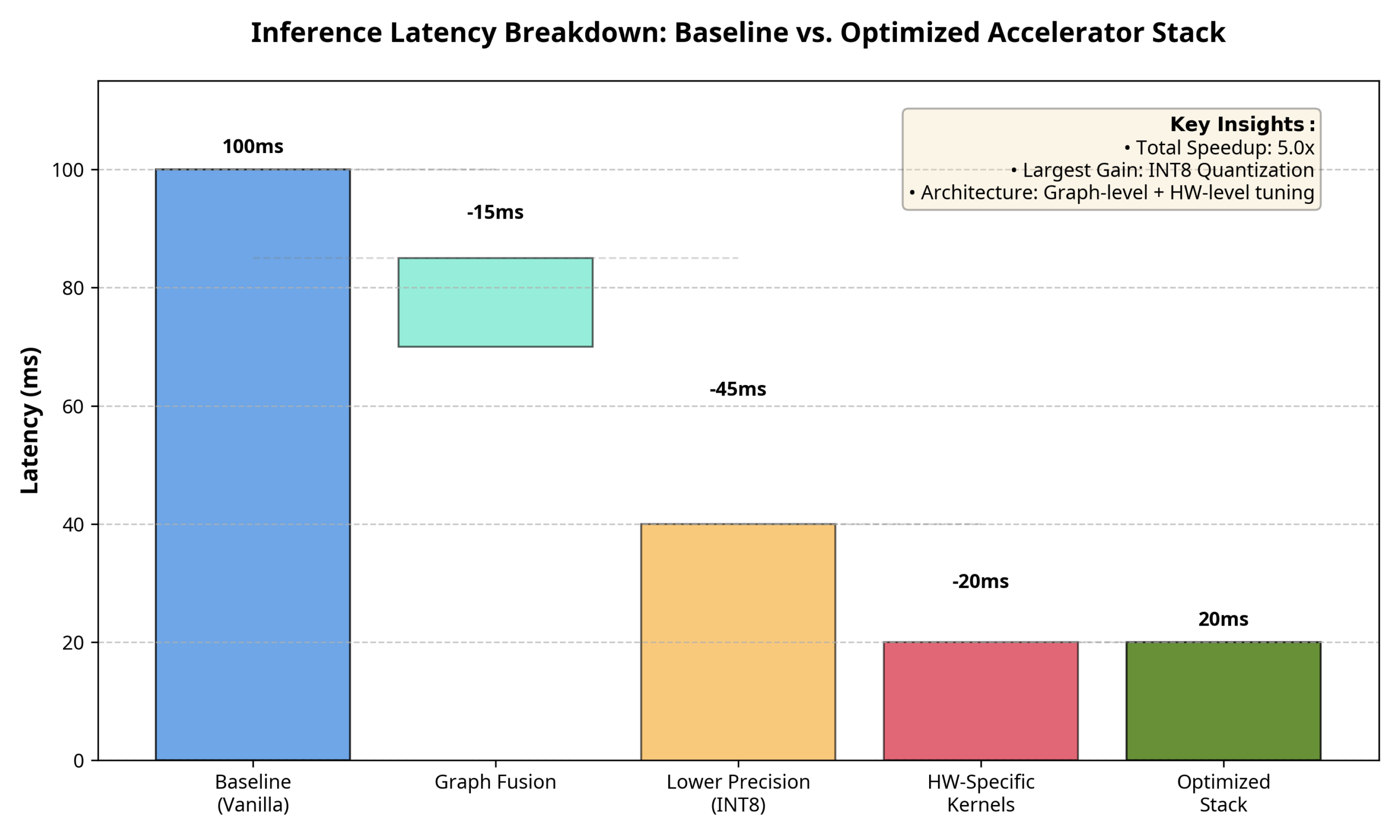
AI accelerators reduce latency by making the expensive parts of inference cheaper and the wasteful parts smaller.
| Latency lever | What the accelerator changes | Why it helps in production |
|---|---|---|
| Specialised compute | Tensor engines, matrix units, and systolic arrays focus silicon on the operations neural nets use most. | More of the chip is doing useful work instead of waiting on general-purpose control logic. |
| Lower precision | FP16, BF16, FP8, INT8, and INT4 reduce the cost of moving and processing data. | Less memory traffic usually means lower latency, especially for large models. |
| Graph and kernel fusion | Runtimes combine adjacent operations and remove unnecessary round trips to memory. | Fewer kernel launches and fewer reads or writes cut overhead. |
| Execution providers | Frameworks send each part of the model to the best hardware backend available. | The model lands on the fastest path for the device in front of it. |
| Faster interconnects | GPU-to-GPU communication is handled with high-bandwidth links and smarter transport selection. | Multi-device inference does not stall while devices wait on each other. |
NVIDIA’s TensorRT is a good example of software and hardware meeting in the middle. NVIDIA describes it as an inference optimiser that uses quantisation, layer and tensor fusion, and kernel tuning. That is the kind of work that turns a model from “functionally correct” into “production ready”.
Microsoft takes a similar approach with ONNX Runtime, which it describes as optimising for latency, throughput, memory use, and binary size. ONNX Runtime also uses execution providers to split computation across hardware-specific backends, including GPU and NPU paths. In plain English: the runtime tries to avoid making your accelerator behave like a generic CPU.
Why Memory and Communication are the Hidden Killers
Large language models spend a surprising amount of time moving data rather than calculating it. The attention cache, model weights, activations, and intermediate tensors all compete for bandwidth. Once that traffic grows, even a powerful accelerator can feel sluggish if the memory hierarchy is weak.
This is why vendors keep pushing on-chip memory, high-bandwidth memory, and better transport between devices. NVIDIA’s recent work on multi-device inference points to the same issue: when decode steps are small, static overheads and communication setup can dominate the wall clock. The fix is not just “more GPU”; it is less waiting between GPUs.
Google’s newer TPU work also goes after collective communication latency directly. In its TPU 8t/8i deep dive, Google says TPU 8i reduces on-chip collective latency by 5×. That is a very specific reminder that modern AI hardware is now optimising the glue between chips, not just the math inside them.
A Deployment Pattern
For teams shipping real systems, the winning pattern is usually the same:
- Profile the bottleneck. Check whether the delay is in model compute, queueing, preprocessing, or device communication.
- Pick the right runtime. Use a hardware-aware stack such as TensorRT, ONNX Runtime, or a cloud-specific TPU or Inferentia path.
- Reduce precision where it is safe. Quantisation and lower-precision execution often cut latency without wrecking quality.
- Fuse and compile. Let the runtime fold operators together so the accelerator spends less time bouncing through tiny steps.
- Deploy close to users. For edge or local workloads, Microsoft’s Windows ML and ONNX Runtime stack can run models on CPU, GPU, or NPU with hardware-optimised execution providers.
A useful mental model: if your model is fast in a notebook but slow in production, the chip is rarely the whole story. The serving path is usually where latency gets lost.
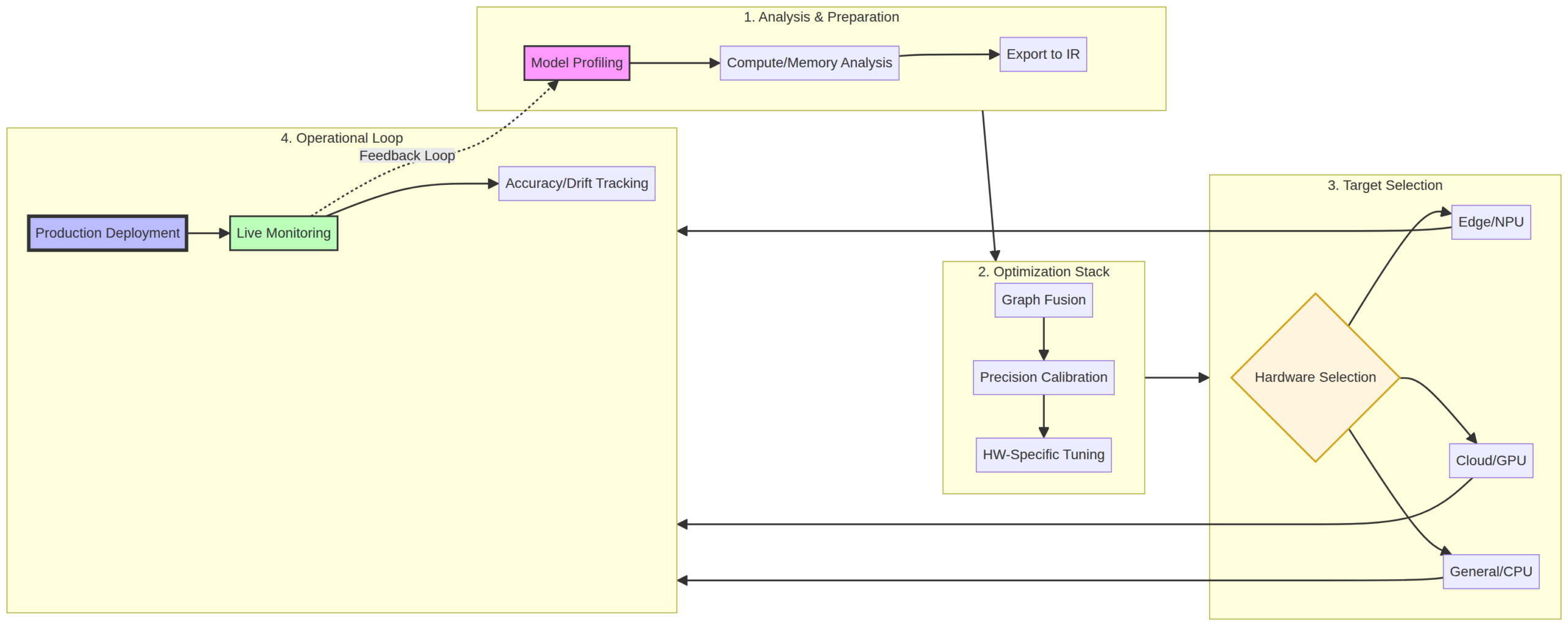
AI accelerators are reducing latency by doing something more interesting than brute force. They are shrinking the cost of arithmetic, keeping data close to compute, trimming communication overhead, and giving runtimes the tools to map a model onto the right hardware path. That is why platforms like TensorRT, ONNX Runtime, AWS Inferentia, and Google TPUs keep showing up in production systems that have to answer quickly and consistently.

Discover more from Aree Blog
Subscribe now to keep reading and get access to the full archive.