What if the biggest advantage on YouTube today isn’t a better camera, but a better workflow? For years, creators chased expensive gear, elaborate editing setups, and larger production teams. Today, artificial intelligence is changing that equation.
A solo creator can research a topic, write a compelling script, edit footage, generate captions, design thumbnails, and optimize videos for search in a fraction of the time it once took. The key isn’t replacing creativity with automation—it’s removing repetitive tasks so you can spend more time making videos people actually want to watch.
That distinction matters. The creators seeing consistent growth aren’t handing their channels over to AI. They’re using it as a productivity partner, while maintaining their own voice, judgment, and storytelling. Recent industry analysis continues to show that AI delivers the greatest value when it supports human creativity rather than attempts to replace it.
Start with Ideas and Scripts
Every successful YouTube video begins long before the camera starts recording. Finding a fresh angle, validating an idea, and organizing information into a clear narrative remain some of the hardest parts of content creation.
General-purpose AI assistants such as ChatGPT, Claude, and Google Gemini have become valuable research companions. They can help generate video ideas, organize research, draft outlines, and refine introductions that capture attention without resorting to clickbait.
Still, creators should resist publishing AI-generated scripts without editing them. Viewers quickly recognize generic writing. The strongest channels inject personal experience, original examples, and unique perspectives that no language model can replicate.
If you’re producing educational or technology-focused videos, combining AI research with reputable sources and firsthand insights creates content that is both informative and trustworthy.
Editing Is Becoming Less About Clicking and More About Storytelling
Video editing has traditionally been one of the most time-consuming stages of production. AI is steadily removing much of that burden.
Tools like Descript allow creators to edit videos simply by editing the transcript. Removing filler words, cutting pauses, generating captions, and cleaning audio can now take minutes instead of hours. Meanwhile, CapCut continues to offer impressive AI-assisted editing features for creators who want professional-looking results without mastering complex software.
Professional editors aren’t being replaced—they’re being freed from repetitive work. Human judgment still determines pacing, emotional impact, and narrative flow, while AI handles the mechanical tasks. Industry experts consistently note that this balance produces better videos than relying entirely on automation.
AI Can Create Visuals, But Original Footage Still Wins
Not every creator has access to expensive locations, actors, or production equipment. That’s where AI video generators like Runway, Pika, and Luma AI have found their niche.
These platforms can generate cinematic B-roll, animated sequences, and visual effects that would otherwise require significant budgets. They’re particularly useful for explainer videos, documentaries, and technology channels that need supporting visuals.
However, AI-generated footage should enhance a story rather than become the story itself. Original recordings, demonstrations, interviews, and authentic experiences remain far more engaging and credible than entirely synthetic videos.
Better Voiceovers Without a Recording Studio
Clear audio often matters more than perfect visuals. Viewers will forgive average video quality far sooner than poor sound.
ElevenLabs has established itself as one of the leading AI voice platforms, producing remarkably natural narration in multiple languages. Adobe Podcast has also become a favorite among YouTubers by improving microphone recordings with minimal effort.
These tools are especially valuable for creators producing tutorials, documentaries, or faceless channels. Even so, many successful creators continue to use their own voices because familiarity helps build trust and a stronger connection with audiences.
Don’t Ignore SEO
Creating a great video is only half the battle. People still need to find it.
Platforms such as VidIQ and TubeBuddy help creators identify keywords, improve titles, analyze competitors, and monitor trends before pressing the publish button. Instead of guessing which topics might perform well, creators can make decisions based on search demand and viewer behavior.
That doesn’t mean every title should chase algorithms. The most effective YouTube SEO aligns genuine audience interest with clear, accurate titles and compelling thumbnails.
Repurpose Long Videos Into Shorts
One long-form video can now fuel an entire week’s worth of content.
AI clipping tools like Opus Clip automatically identify engaging moments, reframe videos for vertical viewing, and generate captions suitable for YouTube Shorts and other social platforms.
These tools dramatically reduce editing time, but they aren’t perfect. Reviewing every clip before publishing remains essential to ensure important context isn’t lost or misleading moments aren’t accidentally highlighted.
AI Is Powerful, But Authenticity Still Matters
As AI-generated content becomes more common, YouTube continues refining its policies around synthetic media and creator transparency. Videos that rely heavily on automation without meaningful human contribution may struggle to build lasting audiences, even if they satisfy technical production standards.
The channels enjoying sustainable growth share one characteristic: they use AI to improve efficiency while preserving originality, personality, and expertise. That’s ultimately what keeps viewers returning.
Think of AI as your production assistant rather than your creative director. Let it organize research, clean audio, remove repetitive edits, and suggest optimizations. Then step in to provide the insight, humor, experience, and perspective that make your channel unique.
Building an Effective AI Workflow
For most creators, a complicated software stack isn’t necessary.
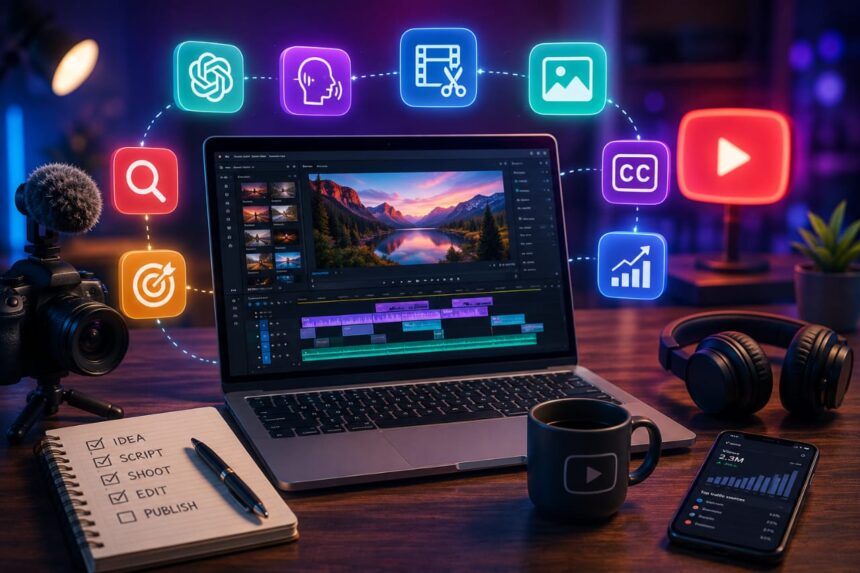
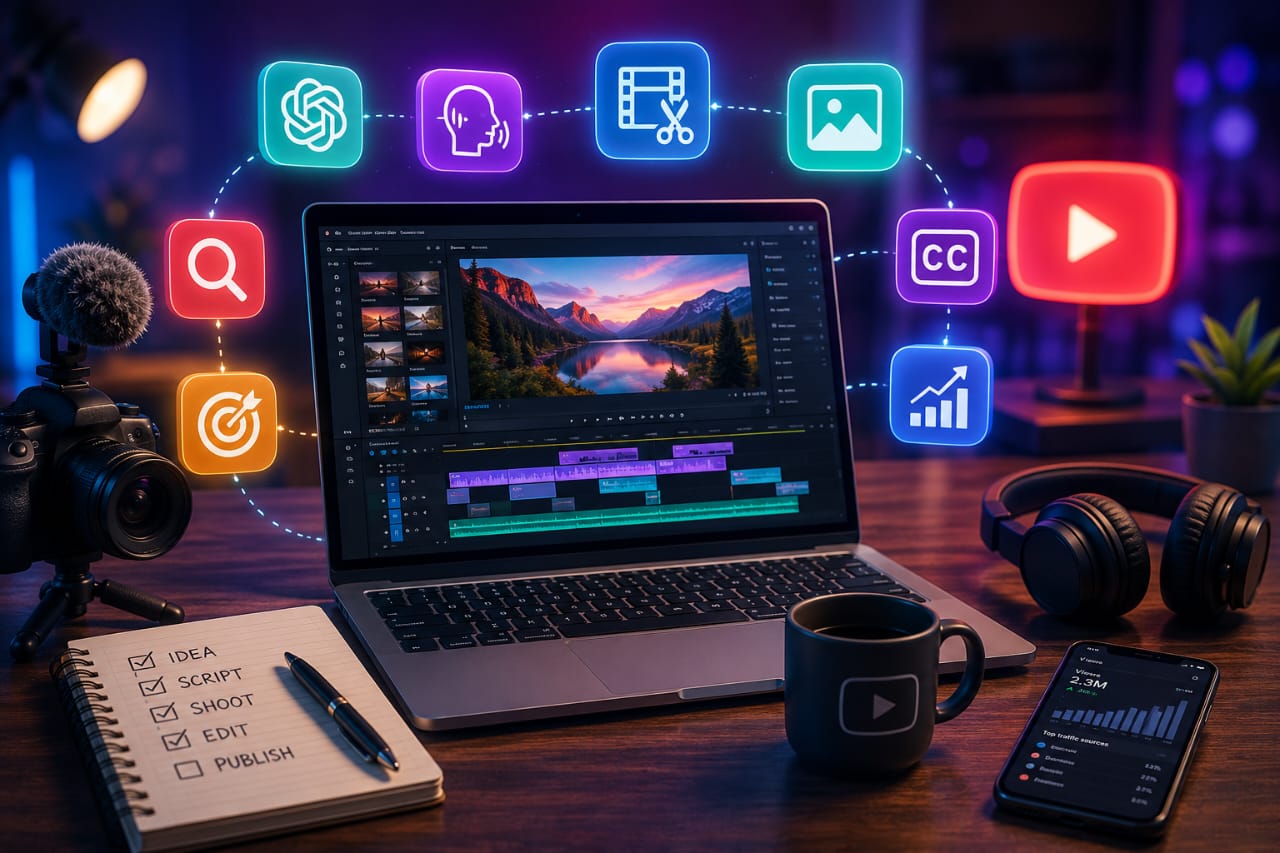
A practical workflow might begin with ChatGPT or Gemini for research, followed by Descript for editing, ElevenLabs or Adobe Podcast for audio improvements, Canva AI for thumbnails, VidIQ for optimization, and Opus Clip for repurposing long-form videos into Shorts.
This combination speeds up production without sacrificing quality, allowing creators to publish consistently while focusing on what viewers value most—helpful, engaging, and original content.
The future of YouTube won’t belong to creators who automate everything. It will belong to those who know exactly where automation ends and creativity begins.

Discover more from Aree Blog
Subscribe now to keep reading and get access to the full archive.