Singapore is committing S$220 million, about US$173 million, over three years to strengthen technology and innovation across its financial sector.
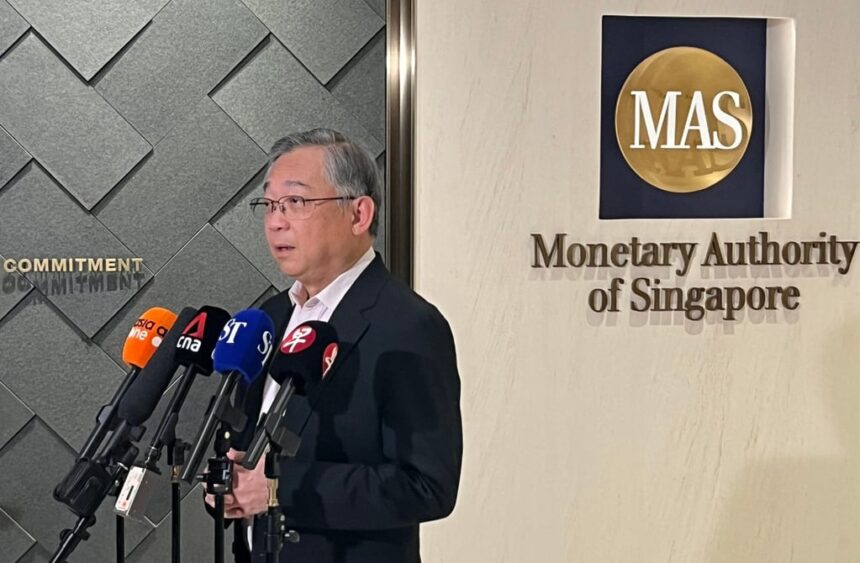
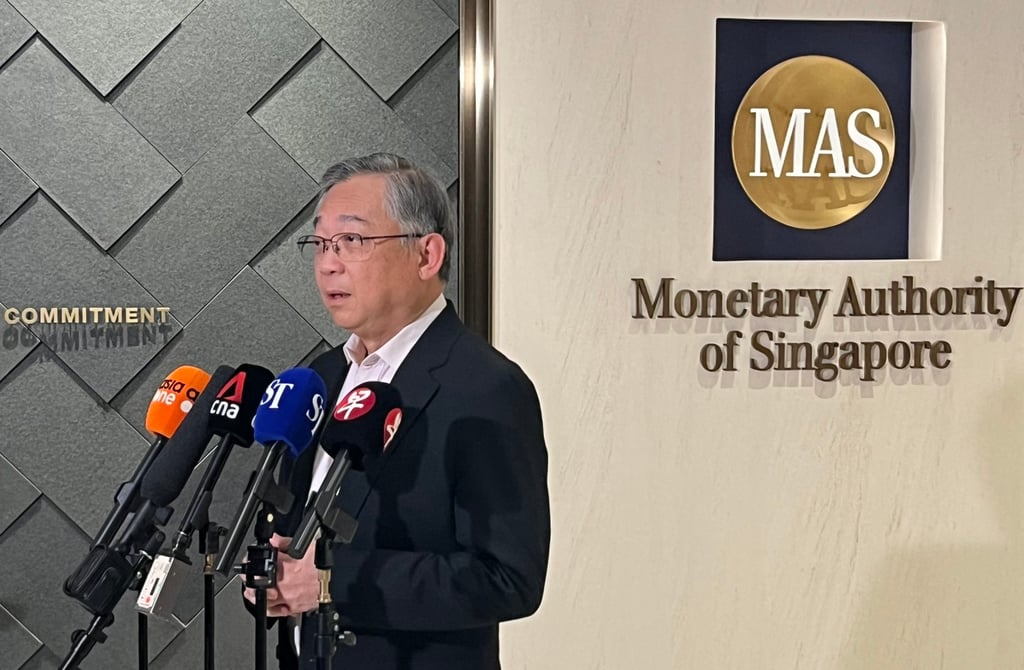
The funding is part of the Monetary Authority of Singapore’s (MAS) fourth Financial Sector Technology and Innovation Scheme (FSTI 4.0), announced on August 31, 2026, by Deputy Prime Minister and MAS Chairman Gan Kim Yong.
The new programme places greater emphasis on the adoption and deployment of technology, with artificial intelligence, distributed ledger technology and quantum technology among its initial priorities.
According to the Monetary Authority of Singapore, FSTI 4.0 is intended to anchor and scale innovation activities, accelerate the development and adoption of financial technologies, build technology infrastructure for the financial sector and strengthen the pool of fintech talent.
The S$220 million commitment will be distributed through six tracks covering technology adoption, institutional projects, shared infrastructure, centres of excellence, talent and the Global FinTech Hackcelerator.
One of the most prominent changes is the introduction of the AI Pathfinder track.
The track is designed to help financial institutions adopt market-ready artificial intelligence solutions listed on PathFin.ai, an MAS platform that connects financial institutions with AI fintech companies and ecosystem partners.
The programme is intended to move proven AI solutions into financial-sector deployments rather than focusing only on experimentation.
Under AI Pathfinder, eligible Singapore-based AI fintech providers can receive support covering 50% of qualifying costs, capped at S$200,000. For providers based overseas, support is capped at S$100,000.
Another component, the Institution Project track, will support Singapore-based financial institutions and fintech firms developing and deploying innovative technology solutions.
Its initial frontier-technology priorities are artificial intelligence, distributed ledger technology and quantum technology.
Projects must demonstrate business impact, technical feasibility and innovation. MAS said routine digitalisation and the implementation of off-the-shelf technology do not qualify.
Eligible projects can receive up to 50% of qualifying expenses, capped at S$1 million, for a funding period of up to 24 months.
Qualifying expenses can include manpower, professional services, hardware and software infrastructure, subscriptions, licences, intellectual property rights and external auditor certification.
FSTI 4.0 also includes an Infrastructure & Platform track focused on technology infrastructure and platforms that can support the wider financial sector.
The track is intended to improve sector efficiency, productivity, innovation and financial interoperability while supporting the development of global financial standards.
Qualifying industry-wide infrastructure projects can receive up to 70% support for eligible expenses for a period of up to 24 months.
MAS is also using the programme to attract and expand innovation functions in Singapore through its Centre of Excellence track.
The track targets major financial institutions, fintech scale-ups and global technology companies, with areas including artificial intelligence, quantum computing, digital assets and other emerging financial technologies.
Eligible centres can receive support for qualifying manpower expenses at rates of up to 50% for Singapore citizens and 25% for non-citizens, including permanent residents, over 24 months. Non-manpower expenses can receive up to 50% support.
Talent development forms another part of the initiative.
MAS is launching a new FinTech Internship Portal, managed by the Singapore FinTech Association, to connect fintech companies with students from Singapore’s Institutes of Higher Learning.
The target is at least 1,000 fintech internship opportunities over three years.
Eligible internships must last at least three months and include defined learning outcomes. They can be full-time or part-time.
MAS will cover 80% of the monthly internship stipend, capped at S$1,000 per month, for up to 12 months. Participating firms can receive support for up to 10 interns in each calendar year.
The scheme also expands support for companies taking part in the Global FinTech Hackcelerator.
Eligible finalists can apply for a Global FinTech Hackcelerator Scale-up Grant of up to S$500,000 to develop and validate solutions after the competition, attract private investment and scale their businesses.
MAS said Hackcelerator finalists have raised more than S$3.8 billion since the programme began.
The authority also said more than 30 Centres of Excellence have been established.
Singapore’s fintech sector has expanded significantly since the original FSTI programme was introduced in 2015.
MAS said the country now has more than 1,800 fintech companies employing close to 10,000 professionals across areas including technology, data, artificial intelligence, compliance, cybersecurity and business functions.
Fintech investment in Singapore reached S$2.9 billion in 2025, according to MAS.
More than 350 fintech projects have received support since the first FSTI programme began.
With the latest commitment, cumulative funding committed through the four FSTI iterations has reached S$845 million.
FSTI 1.0, introduced in 2015, had a S$225 million commitment. FSTI 2.0 followed with S$250 million from 2020 to 2023, while FSTI 3.0 committed S$150 million from 2023 to 2026.
The latest S$220 million allocation is therefore larger than the previous three-year tranche.
The new programme also comes as Singapore’s fintech sector faces shortages in specialised technology skills.
A 2025 talent report from the Singapore FinTech Association identified shortages in areas including artificial intelligence, data science, cybersecurity and cloud architecture. The report also highlighted recruitment delays, high compensation expectations and employee turnover.
Industry representatives have welcomed the stronger focus on adoption and commercialisation.
Singapore FinTech Association president Holly Fang said the new scheme places greater emphasis on adoption and commercialisation rather than ending at innovation and experimentation.
YouTrip chief executive Caecilia Chu said the dedicated AI track and enhanced grants could encourage businesses to develop new AI products amid a relatively muted venture-capital and growth-capital environment for startups.
Funding Societies co-founder Kelvin Teo said co-funding could reduce the cost and risk of experimenting with and adopting AI and other technologies, particularly for smaller businesses.
Gan Kim Yong was also asked whether the programme would help Singapore compete with other financial centres, including Hong Kong.
He said financial centres do not operate in a zero-sum game and argued that Singapore must continue improving as other financial hubs strengthen. He also said innovations developed in Singapore could benefit financial industries across the region.
FSTI 4.0 therefore combines direct project support with industry infrastructure, technology adoption, talent development and efforts to attract specialised innovation capabilities.
The overall S$220 million commitment is not a single fund dedicated exclusively to artificial intelligence or infrastructure. It covers the six FSTI 4.0 tracks, with AI, frontier technologies, infrastructure, talent and fintech ecosystem development forming parts of the wider programme.

Discover more from Aree Blog
Subscribe now to keep reading and get access to the full archive.