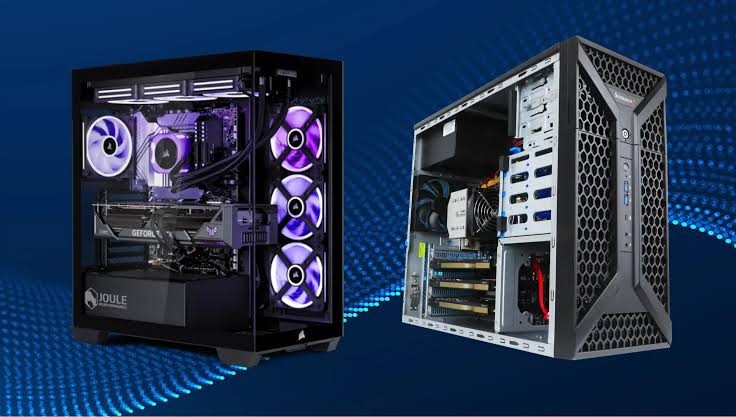
Startups are trying to turn idle gaming PCs into a distributed source of computing power for artificial intelligence workloads, giving owners of consumer GPUs a way to earn from hardware that would otherwise sit unused.
The approach is gaining attention as companies look beyond conventional data centers for AI inference capacity. Far Labs and Evolving Edge are among the companies building networks that connect privately owned computers to customers seeking computing resources for smaller, mostly open-source AI models.
IEEE Spectrum reports that Far Labs is preparing to launch its Far AI platform, while Evolving Edge is operating an open beta.
Companies Build Markets for Spare Computing Capacity
The concept is straightforward. A computer owner installs software that allows unused computing capacity to be made available to the network. When an AI workload is assigned to the machine, the owner provides the processing capacity and receives compensation.
Tom’s Hardware reported on September 2 that the model remains unproven as a source of meaningful profit for individual PC owners. The publication noted that the companies had not provided concrete payout rates showing how much a typical gaming PC could reliably earn.
That uncertainty is important because the cost of operating a powerful gaming computer does not disappear when its owner begins renting out its hardware.
Electricity Costs Complicate the Profit Equation
Tom’s Hardware used an Nvidia RTX 4090 as an example, noting that the card can consume roughly 350 to 450 watts under sustained workloads. At an electricity price of $0.15 per kilowatt-hour, running the GPU continuously could cost roughly $40 to $50 a month in electricity alone.
The rest of the computer adds to that cost, including the processor, motherboard, memory, storage, cooling system and other components.
The actual return therefore depends on how often the GPU receives workloads, how much the network pays the owner and how much electricity the computer consumes while operating.
Far Labs Splits AI Workloads Across Machines
Far Labs is developing a system designed to divide AI workloads among different machines. According to IEEE Spectrum, its software can split a model into pieces and distribute those pieces across multiple devices.
An orchestrator and load balancer control the tasks and coordinate the results. The approach is intended to allow a network containing different types of consumer hardware to handle workloads without requiring every machine to have identical capabilities.
Far Labs entered closed testing with selected partners in April 2026 and opened registrations for GPU operators.
The company says its potential network could eventually draw on more than 3 billion idle GPUs worldwide. That figure is a company estimate of the potential hardware pool, rather than a verified count of GPUs operating on its network.
Evolving Edge Takes a Broader Approach
Evolving Edge is pursuing a broader distributed computing model. The Austin-based company wants to use residential and small-business computers as part of an edge computing network.
Its system can use GPUs, CPUs, storage and bandwidth. The company uses the open-source Ray framework to distribute workloads across machines.
Evolving Edge describes a network that can combine neighborhood computing resources with regional infrastructure. It says workloads can be routed according to factors including location, performance, demand and cost.
The company says contributors can earn up to 25% of the earnings generated by tasks completed on their computers. It also says actual earnings depend on factors including computer performance and internet connectivity.
Inference Is the Main Target
The companies are not presenting consumer GPUs as replacements for the largest AI data centers.
Instead, they are focusing on inference, the process of running a trained AI model to generate an output.
Smaller models can require considerably less computing capacity than the systems used to train frontier AI models. That creates potential opportunities for consumer GPUs in applications such as image generation, transcription, computer vision and other AI services.
Large AI training operations, meanwhile, are expected to continue relying heavily on centralized data centers and high-end accelerators.
Consumer Networks Face Data Center-Level Challenges
A distributed network of gaming PCs is fundamentally different from a conventional AI data center.
Consumer machines have different GPUs, memory capacities, processors and internet connections. They can also go offline without warning when their owners shut them down or disconnect them.
Network latency presents another problem. Machines in a distributed network may be separated by large geographic distances and connected through residential internet services.
These conditions make workload scheduling more difficult and can affect performance and reliability.
Security Is Another Major Concern
Allowing external customers to run workloads on a privately owned computer also creates security risks.
Far Labs says its workloads run in isolated environments with encrypted communications and controls that limit access to computing, memory, storage and network resources.
Evolving Edge has open-sourced its node software, allowing contributors to inspect the software used to provide computing resources.
These measures are designed to separate customer workloads from the computer owner’s environment, although the companies’ security claims should be distinguished from independent security assessments.
Salad Provides Evidence That the Model Can Operate
The idea has a significant existing precedent in Salad, which has been developing a consumer-computing marketplace since 2018.
Salad says its network has more than 450,000 worldwide earning nodes and more than 60,000 daily active GPUs across 191 countries.
The company says businesses are already using its network for AI and machine-learning workloads.
Salad says Civitai uses more than 600 consumer GPUs through its platform to provide inference for 10 million images per day and train more than 15,000 LoRAs each month. Those figures are based on Salad’s own customer case study.
Marketplace Pricing Does Not Equal Owner Earnings
Salad currently advertises GPU cloud prices starting at $0.02 per hour. Its listed customer prices vary considerably by GPU.
For example, Salad lists an RTX 5090 at about $0.25 per hour, an RTX 4090 at $0.16, an RTX 3090 at $0.09 and an RTX 4070 at $0.07.
Those are customer-side prices. They should not be interpreted as the amount paid directly to the person providing the GPU.
The marketplace must also account for infrastructure, networking, software, payments, support and other operating costs.
Existing Platforms Also Show the Limits
Salad’s own documentation warns that electricity costs can exceed earnings for some users. Its support material says profitability depends on local electricity prices and workload availability, and that workloads are not necessarily available continuously.
That makes utilization one of the most important variables in the economics of consumer GPU rental.
A GPU that receives workloads continuously has a very different financial profile from one that is available for rental but spends much of the day idle.
Other Networks Are Pursuing Similar Models
Far Labs and Evolving Edge are part of a wider group of companies working on distributed computing.
Bless Network allows users to contribute computing resources from personal devices and says its network is designed for workloads including AI inference, training, rendering and data processing.
Gradient has developed Parallax, an open-source distributed inference system that supports model sharding, pipeline parallelism and scheduling across geographically separated machines.
Salad, Bless Network, Gradient, Far Labs and Evolving Edge are therefore pursuing related versions of a broader idea: use computing capacity that already exists outside traditional data centers.
Research Raises Questions About Proving Useful Work
A June 2026 research paper examining Pearl’s Proof-of-Useful-Work system provides a separate warning about decentralized computing networks.
The researchers estimated that Pearl represented roughly 320,000 GPU equivalents and consumed about 112 megawatts. They reported that the network was performing computations that did not constitute useful AI inference.
The researchers also found that Pearl’s verification mechanism could accept random matrix calculations as valid work.
The findings concern Pearl’s particular protocol and do not establish that Far Labs, Evolving Edge, Salad or other distributed inference providers are performing the same type of computation.
They do, however, illustrate the difficulty of independently verifying what a decentralized network is actually computing.
Studies Show Consumer GPUs Can Handle Some AI Workloads
Research also provides evidence that consumer GPUs can be useful for some AI inference applications.
A 2025 study comparing consumer RTX 4090 configurations with Nvidia H100 systems found that four RTX 4090s achieved about 62% to 78% of H100 throughput in the tested configurations.
The study also found significant differences in latency under heavy workloads, highlighting the trade-off between lower-cost consumer hardware and specialized data-center accelerators.
The Business Case Remains Unproven for Individual Owners
The evidence supports a narrower conclusion than the idea that gaming PCs could simply replace AI data centers.
Consumer GPUs can provide useful computing capacity for some workloads, and existing platforms show that distributed networks can organize that hardware into a commercial service.
What remains unclear is whether individual gaming-PC owners can consistently earn enough to cover electricity, hardware wear and other costs while producing a worthwhile profit.
For owners, the calculation depends on electricity prices, utilization, compensation rates, downtime and the cost of running the entire computer.
The central question for the emerging market is whether there will be enough paying demand to keep large numbers of consumer GPUs busy while still providing an attractive return to the people supplying the hardware.
For now, distributed consumer computing has established technical and commercial precedents, but the economics of turning an ordinary gaming PC into a consistently profitable AI resource remain unproven.

Discover more from Aree Blog
Subscribe now to keep reading and get access to the full archive.