In July 2025, a new package quietly appeared on PyPI. Within weeks, it was downloaded nearly 10,000 times. Not an innocent utility or a developer convenience, but a framework called Villager, an AI-powered pentesting tool that blends traditional Kali Linux tools with DeepSeek AI’s reasoning capabilities.
The growing accessibility of these tools indicates a new stage in cybersecurity. Red teams and penetration testers can use them to improve efficiency, but the same technology is just as usable by malicious actors. Villager exemplifies the dual-use dilemma, offensive tools built for security testing that may just as easily enable real-world intrusions.
The questions that now hang in the air: How does Villager actually work? What makes it different from other penetration testing frameworks? And most importantly, how should organizations adapt their defenses to anticipate automated attacks guided by AI reasoning?
Key Takeaways:
- Villager is an AI-powered pentesting tool combining DeepSeek AI reasoning with Kali Linux tools.
- It automates multiple phases of an attack: reconnaissance, scanning, exploitation, and post-exfiltration.
- Available on PyPI since July 2025, it has already been downloaded thousands of times, raising supply chain concerns.
- Security researchers warn of dual-use risk: useful for red teams but also attractive to attackers.
- Organizations should actively monitor for installation, block suspicious package downloads, and prepare for automated attacks.
Villager: AI-powered Pentesting Tools
Villager represents more than another framework, it embodies a broader movement where machine intelligence augments offensive security.
For years, penetration testers have relied on manual workflows: running Nmap scans, parsing results, loading Metasploit modules, scripting payloads, and chaining attacks together step by step. That process requires deep technical understanding and time.

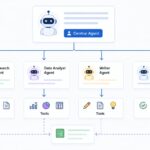
With AI now embedded into these tools, the workflow changes. Villager leverages DeepSeek AI not simply as an assistant, but as an orchestrator. It can analyze reconnaissance results, determine what tools to run next, and execute entire attack chains with minimal human supervision. For example, instead of a tester needing to manually decide which vulnerability scanner to use after a port scan, Villager can make that decision automatically.
The effect is profound: tasks once considered advanced now become accessible at lower skill levels. Skilled testers can save hours, but unskilled users may also find themselves wielding professional-grade offensive capabilities.
How Villager Works
Villager integrates familiar Kali Linux tools (Nmap for scanning, Hydra for password attacks, Metasploit for exploitation) into an AI-directed workflow. At its core is a client that connects these tools to DeepSeek AI, enabling planning and decision-making that feels closer to an autonomous agent than a static script.
When installed, the framework can:
- Conduct reconnaissance with automated enumeration.
- Choose appropriate scanners like Nikto or Nmap depending on detected services.
- Attempt exploitation via Metasploit modules without direct manual selection.
- Chain attacks together, learning from partial results to adapt its next steps.
For penetration testers, this means less time spent switching tools manually and more focus on analyzing results. For attackers, it offers a ready-made playbook of automated attacks.
Download Growth and Distribution of Villager
The numbers tell their own story. Uploaded to PyPI on July 23, 2025, Villager quickly surpassed 10,000 downloads.
Unlike obscure GitHub repositories, its distribution on PyPI makes it accessible to anyone with a Python environment and a single installation command. That simplicity mirrors supply chain risks already familiar to developers: malicious or dual-use packages spreading widely before organizations even know to block them.

Download volume alone does not confirm real-world usage, but it signals reach. Thousands of systems now contain the framework, whether in the hands of researchers, curious developers, or less benign actors. For defenders, that means monitoring for Villager artifacts is no longer optional.
DeepSeek AI: Powering Automated Attacks
DeepSeek AI is at the heart of Villager’s approach. The model is already known for its powerful reasoning abilities and has raised safety concerns in its own right.
Researchers have shown that DeepSeek can be jailbroken into producing instructions for harmful activities, making its integration with offensive tooling especially concerning.
When paired with Kali Linux tools, DeepSeek AI doesn’t just provide raw computation, it introduces strategy. It can decide attack order, adapt to failed attempts, and mimic the judgment of a skilled human operator. This elevates automated attacks beyond simple scripting and closer to full offensive campaigns run by an intelligent system.
Cybersecurity Risks from Villager
Villager introduces several distinct cybersecurity risks that go beyond the typical penetration testing framework.
1. Lowered skill threshold: With automation and AI reasoning, complex attack chains can now be executed by users with limited expertise.
2. Supply chain exposure: Distributed through PyPI, Villager is as easy to install as any mainstream library. Attackers can integrate it into pipelines with little friction.
3. Autonomous orchestration: The combination of reasoning models with scanning and exploitation tools enables near-autonomous attacks, making early detection harder.
4. Attribution challenges: Villager’s association with a group called Cyberspike raises concerns about intent and provenance, complicating trust and accountability.
5. Potential derivatives: Even if Villager itself is restricted or removed, derivatives can emerge quickly once the codebase is in the wild.
Defensive Measures Against Automated Attacks
Organizations should not wait until Villager appears in their environment to act. Practical steps can help detect, restrict, and mitigate its use.
1. Hunt for usage internally: Search for villager package names, suspicious Python wheel files, or processes that launch Nmap, Hydra, or Metasploit unexpectedly. Developer machines, CI/CD environments, and cloud workloads should all be checked.
2. Restrict package installation: Enforce internal mirrors or allowlists for Python dependencies. By blocking unverified packages like Villager, you reduce the risk of inadvertent installation.
3. Monitor egress traffic: Pentesting tools often create unusual outbound traffic: scans, brute-force attempts, or calls to unfamiliar APIs. Logging DNS queries and TLS destinations can reveal suspicious use.
4. Detect abnormal automation: Look for process chains where Python rapidly launches multiple offensive tools. Automated sequences often leave signatures that differ from legitimate admin activity.
5. Update incident response playbooks: Plan for scenarios where an AI tool has automated reconnaissance and exploitation. Lateral movement and rapid post-exploitation attempts should be key triggers for response.
Villager as a Signal of What Comes Next in Offensive Security
The emergence of Villager is unlikely to remain isolated. As AI models grow more capable and accessible, other frameworks will surface that tie intelligent reasoning to offensive tooling. What begins as experimentation by researchers or hobbyists can quickly become an adopted toolset for attackers.
The lesson for defenders is not to treat Villager as an isolated threat, but as an early example of a larger pattern: AI-enabled automation collapsing the gap between professional penetration testing and real-world attack execution.
References for Further Reading
- The Register: Villager PyPI downloads and concerns
- Cisco Unit42: Recent Jailbreaks Demonstrate Emerging Threat to DeepSeek
- CybersecurityNews: AI-powered Pentesting Tool ‘Villager’

Discover more from Aree Blog
Subscribe now to keep reading and get access to the full archive.