London-based artificial intelligence infrastructure startup Callosum has raised $100 million (€85.4 million) in a seed funding round led by Atomico, as the company develops software designed to route AI workloads across different models and computing hardware.
The round also includes Plural, DCVC and the UK’s Sovereign AI Fund. The financing comes less than six months after Callosum emerged from stealth with $10.25 million in pre-seed funding, bringing its disclosed equity funding to about $110.25 million, excluding grants and investments for which individual amounts have not been disclosed.
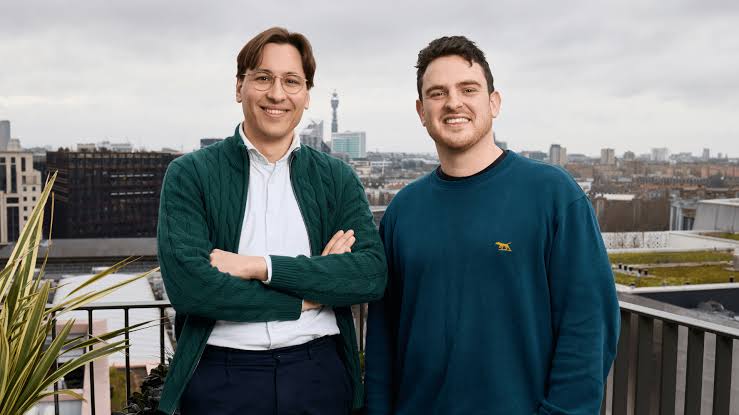
Founded in 2025 by Danyal Akarca and Jascha Achterberg, Callosum is building what it describes as an infrastructure layer for heterogeneous AI computing. Rather than requiring an application to rely on one model or one hardware platform, the company’s system is designed to distribute different parts of an AI workload across models and types of processors according to factors such as performance, latency and cost.
Callosum’s approach is centred on its Tailored Inference platform, which provides APIs for running AI workloads across different computing environments. The company says its software can analyse individual tasks within larger AI and agent workloads and select combinations of models and hardware that are appropriate for each task.
The company argues that this approach is increasingly relevant as AI applications become more complex. A single application can require several types of operations, including reasoning, retrieval, tool use and visual processing, and those operations do not necessarily require the same model or computing architecture.
Callosum therefore aims to separate AI applications from the underlying hardware and allow workloads to move between different infrastructure providers. Its earlier technical work cited support for NVIDIA and AMD accelerators, Google TPUs, AWS Inferentia and AWS Trainium, as well as specialised systems from companies including Cerebras and SambaNova.
One of the company’s major partnerships is with Cerebras Systems. Callosum has said the partnership will make Cerebras’ wafer-scale processors available through its heterogeneous inference platform, with a particular focus on low-latency workloads involving multiple AI agents. Callosum has also announced a partnership with South Korean AI semiconductor company Rebellions.
Its wider infrastructure strategy extends beyond established accelerator vendors. In its February announcement about expanding heterogeneous compute, Callosum identified work involving companies including Cerebras, SambaNova, Normal Computing, Mixx, Cortical Labs and Great Sky, reflecting the company’s interest in combining different types of computing technologies rather than building around a single architecture.
Callosum emerged publicly in February 2026 after raising its $10.25 million pre-seed round, led by Plural. The company said the financing involved 22 investors. It also received a separate $2.9 million research grant from the UK’s Advanced Research and Invention Agency, or ARIA, for research into heterogeneous computing for multi-agent AI systems.
The company has since become closely connected to the UK’s emerging AI infrastructure programme. The UK Sovereign AI Fund identified Callosum as its first investment, backing the startup as part of efforts to strengthen the country’s AI infrastructure capabilities.
Callosum is also involved in ARIA’s Scaling Inference Lab, a programme intended to provide infrastructure for testing emerging AI hardware and inference technologies at larger scale. The British government has separately announced a wider AI Hardware Plan worth more than £1.1 billion, covering computing capacity, hardware innovation and investment in next-generation AI chips.
The involvement of the Sovereign AI Fund gives the funding round a broader strategic dimension. Callosum’s software could potentially allow organisations to combine different domestic and international computing resources behind a common infrastructure layer rather than building applications around one hardware supplier.
Callosum’s founders also bring research backgrounds that helped shape the company’s approach. Akarca and Achterberg met during their doctoral research at Cambridge and have worked across neuroscience and artificial intelligence. Achterberg is a researcher associated with the University of Oxford, while Akarca has worked across medicine, computational neuroscience and AI research.
The company’s name refers to the corpus callosum, the structure that connects the brain’s two hemispheres. The founders have used that biological concept to describe an approach in which specialised components work together rather than relying on a single computing system for every task.
Callosum has reported significant performance improvements in several of its own technical experiments, including lower costs and faster execution for particular workloads. In one example published by the company, it reported that a heterogeneous approach to a deep-context workload achieved substantially lower cost and higher speed than the configuration it compared against. In another demonstration involving VisualWebArena, Callosum reported a reduction in inference cost from about $0.83 to $0.22 for a particular configuration while reducing latency from approximately 780 seconds to 260 seconds.
Those figures are results reported by Callosum from its own experiments rather than independent industry benchmarks, and the company has not presented them as universal performance gains across all AI workloads.
Atomico said its investment reflects a view that AI infrastructure is becoming more diverse as the number of models, accelerators and computing architectures increases. Instead of applications being built around a single model or hardware ecosystem, the investment firm sees an opportunity for infrastructure capable of coordinating different systems.
DCVC, another investor in the round, similarly described Callosum as an orchestration layer for heterogeneous AI infrastructure and highlighted the company’s work across different accelerator and hardware technologies.
Callosum says the new funding will support further research and development, expansion of its team, access to computing resources and continued work with chip, cloud and infrastructure providers. The company has not publicly disclosed a valuation for the $100 million financing.
The new round places Callosum among Europe’s better-funded early-stage AI infrastructure companies only months after its public launch. Its progress is also being closely tied to the UK’s effort to expand domestic AI infrastructure, with support from both private investors and government-backed programmes.
For Callosum, the central proposition is that AI applications should not have to be permanently tied to one model or one type of processor. Its platform is being developed on the assumption that different workloads may perform better on different combinations of models and hardware, with software acting as the layer that coordinates them.
That leaves Callosum competing in an infrastructure category that is still developing, but the size and speed of its latest financing demonstrate the level of investor interest in software designed to manage the increasingly varied systems being used to run AI.

Discover more from Aree Blog
Subscribe now to keep reading and get access to the full archive.