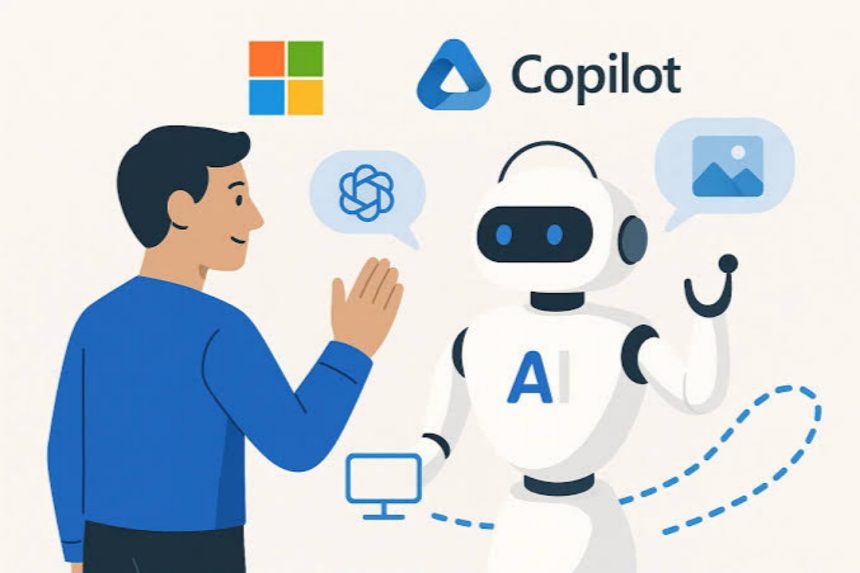

Microsoft used its recent product updates and Ignite announcements to push a clear new direction: turn assistants into active helpers across everyday apps, and at the same time make cloud sign-ins harder for attackers. That shift (moving from passive suggestions to AI agents that can act inside documents, run multi-step tasks and even interact with websites) opens fast new possibilities for getting work done.
Microsoft also rolled out identity controls and guidance designed to stop the common tricks attackers use to steal accounts or trick automated tools.
What AI Agents Are
People have used AI helpers inside apps for a while: ask a chat box to rewrite text or suggest a chart.
The newer idea is agents, pieces of software that don’t just reply to a single prompt but run a sequence of actions, remember context, and take autonomy to complete tasks. An agent might open a spreadsheet, analyze trends, update a slide deck, check a calendar and then follow up in chat, all without the person giving each step.
That change in behavior matters because it changes how data flows and who (or what) has power inside your systems.
When an agent acts on your behalf it becomes a new kind of actor with permissions, memory and access to files. It can speed up repetitive work, but if it isn’t visible and governed, it can also create blind spots: overlooked credentials, misapplied access, or data shared where it shouldn’t be.
AI agents in Microsoft products
Microsoft has started shipping agent features inside Copilot and Microsoft 365 apps. In practice that looks like Copilot Chat being able to spin up document-or spreadsheet-specific agents that iterate on a task, ask clarifying questions, and apply changes directly inside Word, Excel and PowerPoint.
Copilot Studio’s “computer use” capability lets agents interact with applications and web interfaces when there isn’t a neat API to call.
Windows is also experimenting with OS-level agent features and voice/interaction modes that hint at broader agent presence on the desktop.
From a user perspective the payoff is clear, fewer manual handoffs and faster completion of multi-step tasks. From an operational view it adds lots more identities and automation into environments that IT must see and manage.
Managing AI Agents: Inventory, Identity and Observability
Microsoft signaled an answer to that governance challenge with a control plane aimed at tracking and governing agents. That tooling is intended to give IT teams a way to inventory agents, view their activity, and set policies so agents behave within organizational guardrails.
Alongside that, Microsoft has introduced agent-specific identity concepts so agents can be issued credentials and treated like service accounts rather than being hidden inside human accounts or scripts.
The practical effect is twofold. First, agents become auditable actors: who they are, what data they touched and when. Second, organizations get the chance to apply the same lifecycle management, least-privilege and review processes they already use for human and service identities.
In short, if an agent will touch sensitive data, it should show up in the inventory and have limited rights, an expiration, and monitoring.
Stronger Authentication and Fewer Easy Targets
If agents expand who can access data, attackers will naturally target the weakest links to exploit that access.
Microsoft’s security announcements this week focused on removing those weak links. The company pushed organizations toward phishing-resistant multi-factor authentication (FIDO2/passkeys, hardware security keys and modern authenticator flows) and new Conditional Access controls that let admins require stronger proofs for sensitive roles and flows.
Microsoft also emphasized automated identity risk detection, tooling to reduce reliance on SMS and one-time codes, and tighter controls for admin and service accounts. That approach is about raising the cost of compromise: the easier it is for an organization to require cryptographic, phishing-resistant authentication, the harder it becomes for a stolen password or an SMS-phishing trick to grant attacker access.
Where Automation and Security Meet
Organizations that want to take advantage of agent productivity while avoiding surprises should treat agents like new members of the team: visible, credentialed and governed. That means a few concrete actions worth starting now.
First, build an inventory of agents and service identities. Use any available control plane to find agents that have already been created, and tag them with owners, purpose and expiry dates. An inventory reduces guesswork and gives security teams a place to start monitoring behavior.
Second, apply phishing-resistant authentication for admins, service accounts and any accounts that control agent creation or permissions. Moving away from SMS and basic OTPs to passkeys or hardware keys reduces the single largest route attackers use to take over cloud accounts.
Third, apply least privilege and lifecycle rules to agent identities. Give agents only the scopes they need, set short-lived credentials where possible, and schedule periodic access reviews. Treating agents like service principals, not like hidden extensions of human accounts, prevents escalation from automation gone wrong.
Fourth, enable telemetry and alerting for unusual agent behavior. An agent making thousands of outbound requests or accessing data outside its owner’s normal role should trigger review. Early detection is often more effective than perfect prevention.
Finally, make policies and user expectations clear. Agents can do surprising things; training and a short governance playbook help teams design agents responsibly and avoid inadvertent data sharing.
Balancing Usefulness and Safety
The acceleration of AI agents inside tools is one of those moments where usefulness and risk rise together. Agents can remove drudgery and free up time for creative work. They also introduce new actors that require the same attention we already give to apps, service accounts and admin users. Organizations that combine measured rollouts, strong authentication, agent inventory, and ongoing monitoring will get the upside without being caught off guard.

Discover more from Aree Blog
Subscribe now to keep reading and get access to the full archive.