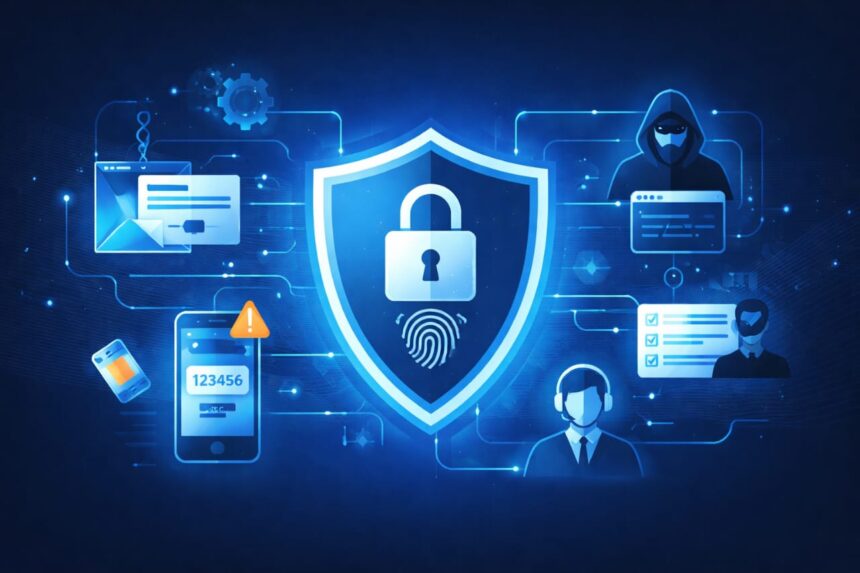
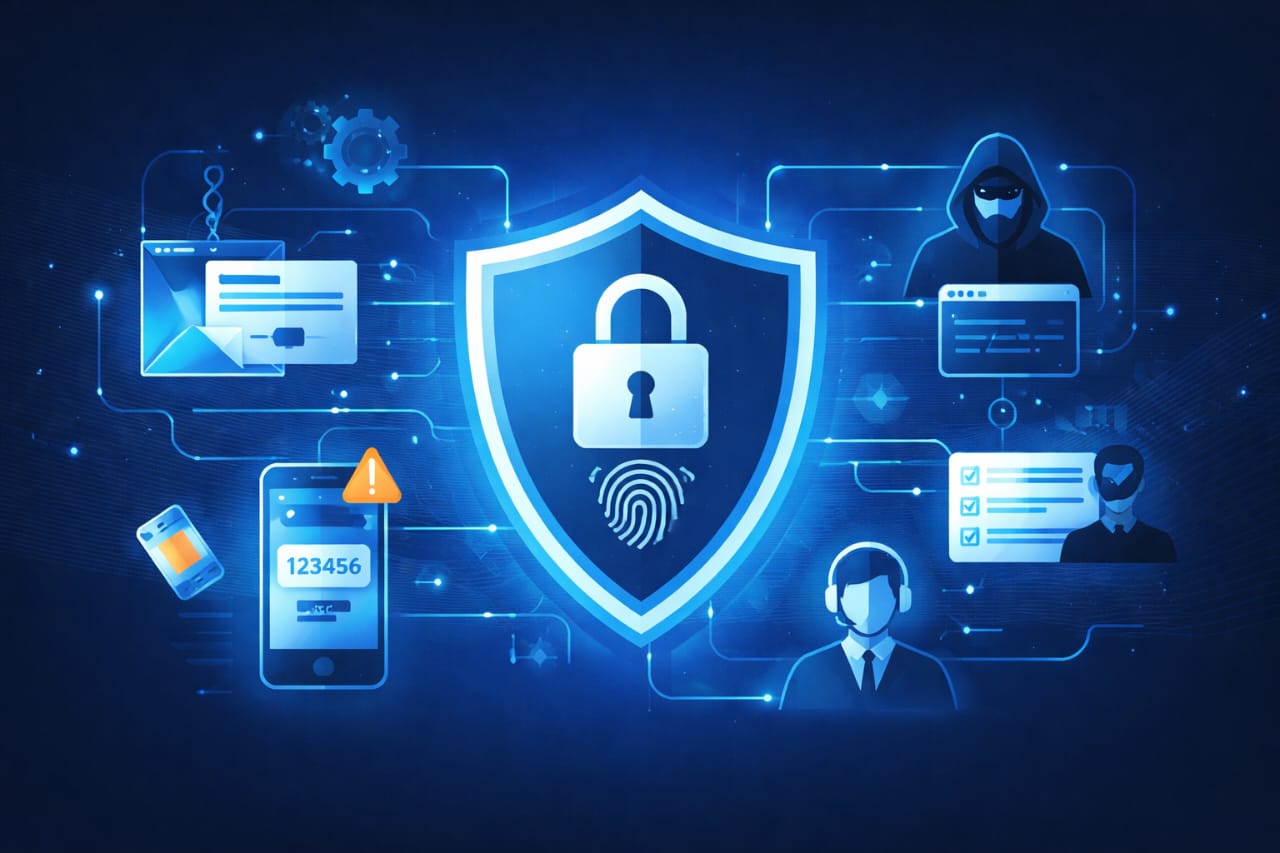
Multi-factor authentication is often described as the extra lock on the door of a digital account. It adds a second step beyond a password, usually a code, a prompt on a phone, or a physical security key. Because of this, many people assume accounts protected by multi-factor authentication are close to invincible. The reality is more nuanced.
Attackers rarely try to break multi-factor authentication directly. Instead, they look for ways around it.
Over the past few years, security teams, cloud providers, and incident responders have documented a growing number of MFA bypass techniques that focus less on technology and more on people, processes, and overlooked gaps. These techniques are now common in real-world breaches affecting companies of all sizes.
How MFA Bypass Techniques Evolved
Early account takeovers relied almost entirely on stolen passwords. Once MFA became widespread, attackers adjusted their approach. Instead of attacking cryptography or authentication algorithms, they shifted toward exploiting human behaviour, session handling, and recovery processes.
This shift is visible in breach investigations from major cloud providers and government agencies. In many incidents, MFA was enabled and technically working as designed. The compromise happened elsewhere: a user approved a login they did not fully understand, a help desk reset an account under pressure, or a trusted session token was quietly reused from another location.
Understanding modern MFA bypass techniques requires looking beyond login screens and focusing on the full authentication lifecycle. That includes how sessions are created, how devices are trusted, how users recover access, and how support teams intervene when something goes wrong.
Real-Time Phishing and MFA Bypass Techniques
One of the most effective MFA bypass techniques today involves real-time phishing. Unlike older phishing pages that simply captured usernames and passwords, modern phishing sites act as a live relay between the victim and the real service.
When a user enters their credentials, the attacker immediately forwards them to the legitimate login page. When the service sends an MFA prompt or one-time code, the phishing site captures it and relays it back in real time. From the user’s point of view, the login appears to succeed normally. In the background, the attacker receives a valid authenticated session.
What makes this technique especially dangerous is that it does not rely on user ignorance alone. Even cautious users who recognise the importance of MFA can fall victim because the interaction feels normal and time-sensitive. Once the session is established, the attacker often no longer needs the password or second factor.
Security teams usually discover these incidents after noticing logins from unusual locations or new devices appearing immediately after a successful authentication. This type of attack has been widely observed in cloud email breaches and business account takeovers.
MFA Bypass Techniques Based on Notification Abuse
Another increasingly common pattern involves overwhelming users with authentication requests. Many MFA systems rely on push notifications sent to a phone or authenticator app. Attackers exploit this by repeatedly triggering login attempts, causing a flood of prompts.
Over time, some users approve a request simply to stop the interruptions, especially if they are busy or distracted. Others may assume the prompts are part of a system issue or delayed login attempt they initiated earlier. The attacker only needs one approval to gain access.
This technique works not because users are careless, but because humans are conditioned to resolve interruptions quickly. In several documented cases, attackers timed these attempts outside working hours or during meetings, increasing the chance of accidental approval.
Number-matching and stronger verification steps have reduced the success rate of this approach, but it remains effective in environments where simple “approve or deny” prompts are still used.
Phone-Based MFA and Account Takeover Risks
SMS and voice-call verification are still widely used, especially for consumer services and small organisations. These methods depend on control of a phone number, which attackers have learned to exploit through social engineering and weaknesses in telecom processes.
In a SIM swap attack, an attacker convinces a mobile carrier to transfer a victim’s number to a new SIM card. Once the transfer is complete, MFA codes sent by SMS or voice call are delivered directly to the attacker. At that point, the second factor offers little protection.
These attacks often begin with publicly available personal information and escalate through customer service manipulation. Victims usually realise something is wrong only after losing network access on their phone.
Because phone-based MFA operates outside the control of the service provider, it introduces risks that are difficult to monitor or mitigate without moving to stronger authentication methods.
Session Theft as an MFA Bypass Technique
Many people assume MFA is checked every time an account is accessed. In reality, most systems only enforce MFA during login. After that, a session token or cookie represents the authenticated user.
If an attacker obtains this token, they can access the account without re-entering credentials or completing MFA again. Session theft can occur through malware, malicious browser extensions, cross-site scripting flaws, or compromised devices.
This technique explains why some breaches appear to bypass MFA entirely. From the system’s perspective, MFA was completed correctly. The attacker simply reused an existing session.
Security teams often detect these incidents by noticing the same session being used from different locations or devices in a short time window. Limiting session lifetimes and binding sessions to devices can reduce the impact, but token theft remains a serious concern.
OAuth Abuse and MFA Bypass Techniques
Modern applications frequently use OAuth to allow third-party apps to access accounts with user permission. This creates another path attackers can exploit.
Instead of logging in directly, attackers trick users into approving a malicious application. Once approved, the app may gain long-term access to email, files, or profile data without triggering MFA again. The user sees a consent screen rather than a login prompt, which often feels less risky.
This approach has been used in targeted attacks against executives and finance teams, where access to email alone is enough to cause damage. Because the access is technically authorised, it can persist unnoticed for long periods.
Visibility into OAuth permissions and regular reviews of approved applications are essential to addressing this class of MFA bypass techniques.
Help Desk Manipulation and Recovery Abuse
Not all MFA bypass techniques involve technology. Some rely entirely on organisational processes. Help desks and support teams are designed to assist users who are locked out or facing urgent access issues. Attackers exploit this by impersonating employees and requesting MFA resets or new device enrolments.
These requests are often framed as urgent, stressful, or time-critical. In some high-profile incidents, attackers successfully convinced support staff to reset MFA for privileged accounts, opening the door to broader compromise.
This technique highlights a recurring theme: MFA is only as strong as the recovery process behind it. If account recovery is weak, attackers will target it instead of the login itself.
Legacy Systems and Incomplete Enforcement
In many organisations, MFA is enabled for primary login portals but not enforced everywhere. Older protocols, internal tools, or custom applications may still allow password-only authentication.
Attackers actively scan for these gaps. If one access path does not enforce MFA, it becomes the preferred entry point. This is especially common in email systems that still allow legacy authentication methods or in APIs that were never updated to support modern authentication.
Closing these gaps requires a full inventory of authentication paths, not just the ones users see every day.
Strengthening Defences Against MFA Bypass Techniques
The consistent lesson across these scenarios is that MFA should be treated as part of a broader identity system, not a single feature. Stronger authentication methods, such as hardware-backed security keys, significantly reduce exposure to phishing and notification abuse. Clear visibility into sessions, devices, and third-party access helps detect unusual behaviour early.
Equally important are human processes. Training users to recognise suspicious prompts, enforcing strict verification for account recovery, and logging all authentication changes can dramatically limit the success of these attacks.
MFA remains one of the most effective controls available, but only when implemented with an understanding of how attackers actually operate.

Discover more from Aree Blog
Subscribe now to keep reading and get access to the full archive.