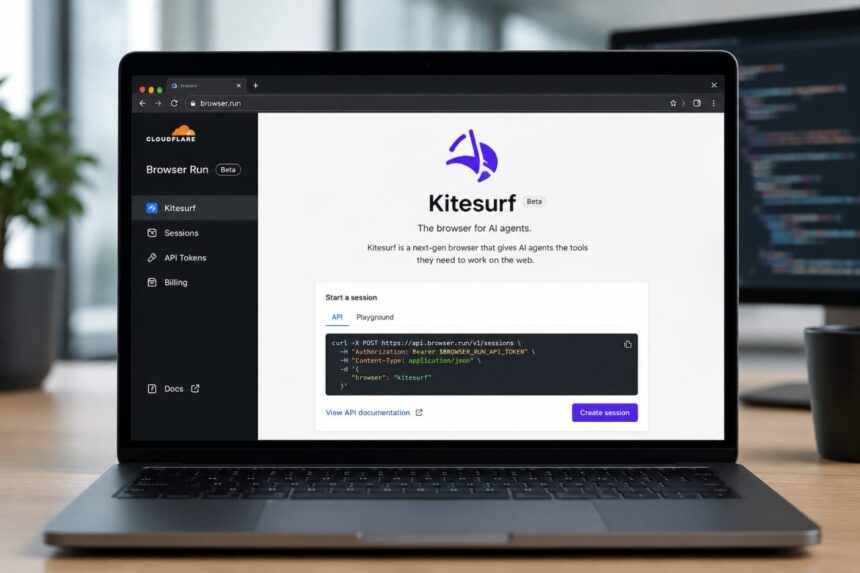
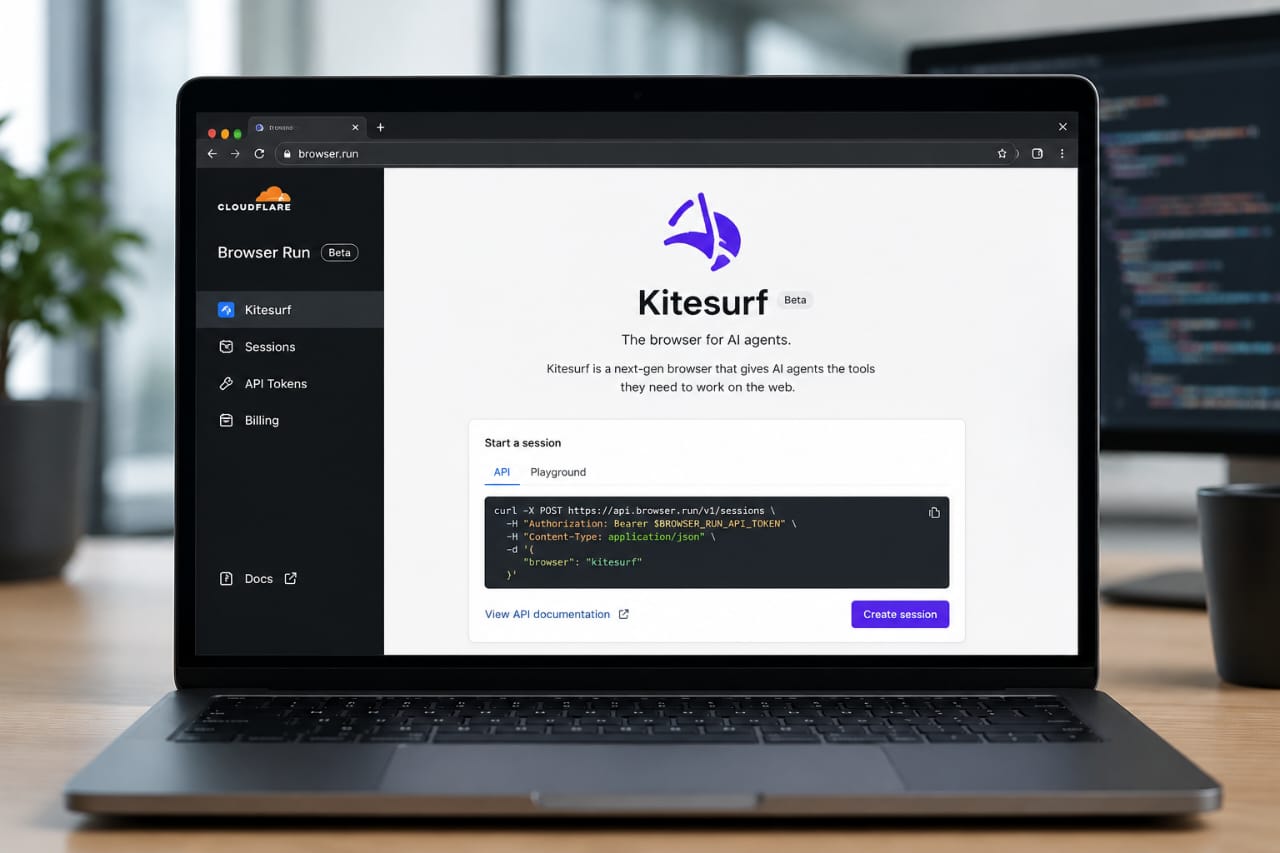
Cloudflare has introduced Kitesurf, a cloud-hosted browser designed for autonomous AI agents and built on its Workers platform.
The company says the browser is meant for machine-driven web interaction rather than everyday human browsing, and it is being released in beta through Browser Run, Cloudflare’s browser execution service.
In its announcement, Cloudflare described Kitesurf as a stateless browser that runs entirely on top of Workers and is tuned for the needs of AI systems, including token efficiency, context-window management, scalability, performance, and cost. The company said this approach trades away features people expect in a full desktop browser, such as tabs, themes, extensions, and pixel-perfect rendering.
Cloudflare says Kitesurf is built to handle tasks that agents actually need, including reading and extracting web content, taking screenshots, filling forms, executing JavaScript, and navigating websites.
The browser is also designed to work with existing automation tools, including Puppeteer, Playwright, and the Chrome DevTools Protocol, which should make it easier for developers to plug Kitesurf into existing workflows.
The company says Kitesurf runs in V8 isolates on Cloudflare Workers rather than in a traditional browser stack built around Chromium. Cloudflare also says common agent tasks such as screenshots and HTML extraction use roughly 3–7 times less CPU and memory than Chromium in its beta testing, though it notes that Chromium can still be faster on wall-clock execution for some tasks.
Cloudflare is positioning the browser as part of a wider push into agent infrastructure. That framing matches the company’s broader browser and AI tooling effort, including Browser Run and other services built for automated web access.
In Cloudflare’s view, agentic systems need a browser that is lighter, cheaper, and more scalable than the tools built for people.
The beta release also comes with clear limits. Cloudflare says Kitesurf does not yet support video playback, WebGL, or persistent authenticated sessions, and it does not try to mimic the full consumer browser experience.
That narrower scope appears deliberate: the browser is aimed at agents that need reliable access to web pages, not a polished interface for human users.
Cloudflare’s launch adds another sign that browser infrastructure is being reshaped by AI. Instead of asking a general-purpose browser to do everything, Kitesurf narrows the job to the parts that matter most for automated systems: access, extraction, execution, and scale.
Resources
- Cloudflare’s official Kitesurf announcement
- Cloudflare Browser Run: Kitesurf documentation
- Browser Run overview from Cloudflare
- TechCrunch coverage of the launch

Discover more from Aree Blog
Subscribe now to keep reading and get access to the full archive.