Phasecraft just closed a $34 million financing round to scale its software work and move quantum computing from lab demos toward practical use. If that money buys a faster path to real-world wins, especially in energy and drug discovery, the ripple effects will be felt across industry and research.
If you care about how new computing tools will change engineering and science over the next few years, this is worth watching. Phasecraft is not building the machines; it builds the code that helps today’s machines run smarter, and the new capital will let the company grow its team, deepen R&D, and expand partnerships.
Key takeaways
- Phasecraft raised $34M in a Series B round led by Plural, Playground Global and Novo Holdings to accelerate product development and industrial collaborations.
- They focus on software that runs on existing hardware from Google, IBM, Quantinuum and QuEra; the company aims to make near-term quantum machines more capable for real problems.
- Short-term wins are likely in simulation tasks like material and chemical modelling (battery tech, catalysts, drug-related calculations) using hybrid quantum-classical approaches.
- Funding will scale talent and R&D (doubling staff reported) and deepen partnerships with end users, essential steps to go from lab demonstrations to commercial pilots.
- Expect narrow, useful breakthroughs first, not overnight disruption: the company sees practical scientific computations near-term, with broader commercial uptake following later.
What Phasecraft Actually Builds and How it Plugs into Existing Machines
Phasecraft writes algorithms and software that help quantum processors solve carefully chosen problems more efficiently. That work sits between raw hardware and the software people use to ask questions about materials or molecules. Because quantum processors today are noisy and limited in size, the trick is to design approaches that get useful answers with fewer quantum operations and some classical computing assistance.

Critically, Phasecraft’s stack is hardware-agnostic. Their code has been adapted for machines from Google, IBM, Quantinuum and QuEra, which use different physical qubit technologies. That compatibility lets customers experiment across providers and pick the system that best fits a specific calculation. In practice, the company’s work translates into fewer required qubits, shallower circuits, and smarter ways to combine quantum runs with classical post-processing.
Why this approach matters for organisations: it lowers the barrier to testing whether quantum tools can help with a real engineering or R&D challenge. Instead of buying hardware, a team can try targeted pilots that use Phasecraft’s algorithms on public or partner machines. For firms exploring advanced materials or catalysis, that changes the risk calculus, small experiments can produce meaningful signals.
Why the $34M Round Accelerates Real Work
Phasecraft says the funding will expand its R&D teams, scale engineering resources, and grow collaborations with industry partners and end users. That combination, people plus customer-facing engineering, is what moves prototypes into repeatable pilots.
Here are the practical levers the money buys:
- More people with focused skills. Quantum algorithm design and engineering talent remain scarce. Hiring those specialists lets Phasecraft iterate faster on algorithmic improvements and on tooling that integrates with customer workflows.
- Bigger R&D runs and reproducible pipelines. Funding supports the compute budgets, experiment coordination, and software reliability work needed to move beyond one-off papers to repeatable outcomes that engineering teams can trust.
- Stronger industry partnerships. Co-developing pilots with battery makers, chemical firms or pharma companies focuses the research on problems that have commercial value and measurable metrics. That narrows risk and creates feedback that guides algorithm design.
If you run R&D, think of Phasecraft’s progress the way you’d view a specialized infrastructure supplier stepping up capacity: better tooling, more features, and a bigger bench of engineers who can embed solutions into customers’ existing processes.
Where Early Advantages Will Show Up
Phasecraft talks about getting to a place where quantum approaches outperform classical methods on useful scientific tasks. Expect the first useful wins to be narrow but real. Here’s a pragmatic view of where that could happen:
- Materials and battery modelling. Small but clever quantum-enhanced simulations can reveal energetic behaviors or reaction pathways that are expensive for classical high-accuracy methods. That’s why energy and materials firms are early collaborators.
- Molecular simulation for catalysts and active sites. Targeted quantum calculations can complement classical screening by validating promising candidates with higher-fidelity runs. That makes lab validation more efficient.
- Optimization subproblems inside larger workflows. Even where full quantum speedups are distant, quantum modules can help with specific optimization bottlenecks when embedded inside broader classical pipelines.
To be clear: these are early, specialty wins, not universal replacements. But for the right problem and the right experimental setup, quantum-enhanced computation can provide a faster path to the next research milestone, which is what many industrial R&D teams actually need.
How Phasecraft’s Background Supports Plausible Progress
Phasecraft began as a university spinout with roots in strong theoretical work. Earlier rounds (including a £13M Series A) financed algorithmic breakthroughs and initial engineering efforts; the new $34M round builds on that foundation. The academic lineage and prior results give the company both credibility and a pipeline of technical ideas to iterate on.
Concrete evidence of progress includes peer-reviewed publications and demonstrations on real hardware, not just simulations. Those show the company has repeatedly reduced the computational cost of certain simulations and pushed the envelope on what current processors can do. That track record is essential when selling pilots to industrial partners who want reproducible, measurable outcomes.
Common Misunderstandings, Cleared Up
- Quantum tools are not an immediate substitute for classical systems. Early wins will be focused: specific calculations where quantum methods reduce resource needs or open new verification paths. Expect hybrid workflows for years.
- Hardware diversity is an advantage, not a complication. Because different providers bring complementary strengths (superconducting qubits, trapped ions, neutral atoms), software that supports multiple machines helps organisations test and select the best fit per calculation.
- Funding doesn’t guarantee instant scale, but it makes disciplined scale possible. Capital enables hiring and engineering, but outcomes still require careful problem selection and rigorous integration with existing R&D processes.
What Investors and Policy-Makers Should Watch
From an investor standpoint, the $34M raise signals two things: (1) investors believe the company can translate algorithms into value, and (2) there’s increasing appetite for software-led approaches to quantum progress. Novo Holdings’ participation is notable because it signals larger institutional interest in commercial quantum software.
Policy-makers should view the round as a reminder that talent and stable public support matter. Public funding that supports long-term talent pipelines and infrastructure helps companies convert academic advances into commercial pilots. Several reports and industry voices have noted the importance of consistent investment to avoid losing momentum.
Where Phasecraft Fits in the Broader Ecosystem
- Hardware firms (Google, IBM, QuEra, Quantinuum): Build and operate quantum processors.
- Software specialists (Phasecraft and peers): Design algorithms, toolchains, and optimisation layers that make machines useful for specific scientific tasks.
- End users (industry R&D groups): Supply domain expertise and real problems; they validate whether the quantum steps provide value.
What to Measure in a Pilot
- Reproducibility: Can the calculation be repeated with consistent results across runs and hardware?
- Comparative accuracy: Does the quantum-enhanced approach provide better or complementary insights than classical baselines?
- Cost per useful result: Include cloud or access fees, engineering time, and downstream lab validation costs.
- Time to actionable insight: If the approach shortens iteration cycles in R&D, that’s a practical win.
Conclusion
Instead of asking “When will quantum replace classical computing?”, ask: “When and where can quantum tools provide measurable, practical benefits that speed up R&D decisions?” That shift focuses effort on experiments that matter to product roadmaps and commercial outcomes.
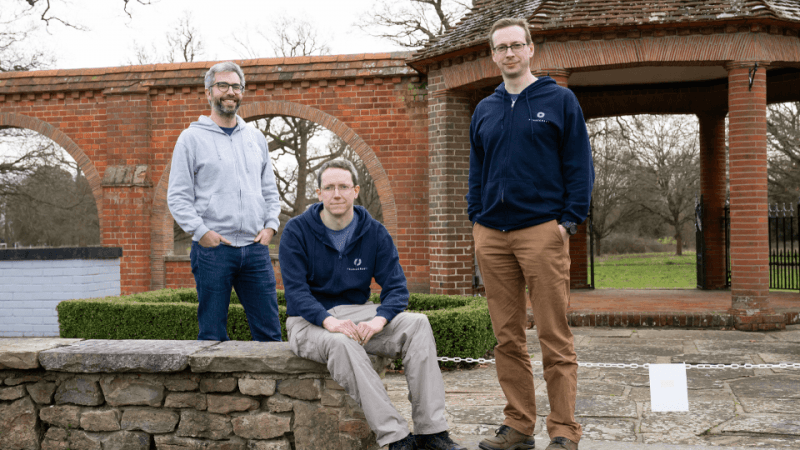
Phasecraft’s CEO Ashley Montanaro has said the firm is “on the cusp” of computations that are scientifically important and that commercial applications will follow after careful development. The company’s new funding and cross-vendor partnerships make those steps easier to execute.
References for Further Reading
- Phasecraft press release: Phasecraft raises $34M from Plural, Playground Global, and Novo Holdings.
- Novo Holdings announcement on co-leading the Series B financing.
- Coverage and analysis: The Times — Quantum software start-up in a super position to expand.

Discover more from Aree Blog
Subscribe now to keep reading and get access to the full archive.