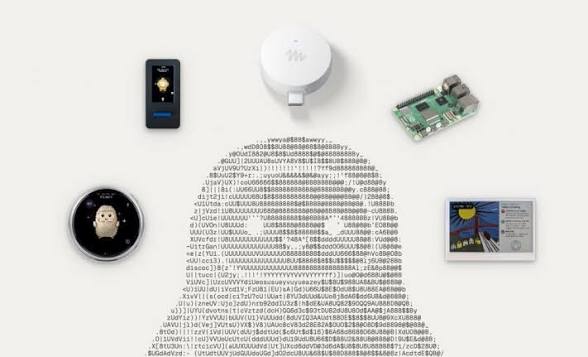
Meta has opened the hardware layer of its Muse personal AI agent to developers, releasing software that allows Muse to connect with ESP32 boards, Raspberry Pi devices and other Linux computers.
The release, announced on October 2, 2026, includes an open-source Muse Gadget SDK with an ESP32 Device SDK and firmware, a Linux Device SDK, and support for custom hardware integrations. Meta’s code is published under the Apache 2.0 license.
The hardware does not run the Muse AI system locally. Instead, the devices connect to a user’s Muse environment and provide physical interfaces such as displays, buttons, microphones, speakers and sensors. On Linux systems, the connection can go further, allowing Muse to interact with the host computer.
Meta’s Muse Gadgets documentation describes the project as a way for users to build their own physical interfaces for Muse rather than limiting the agent to Meta’s own hardware.
ESP32 boards can become Muse interfaces
The ESP32 implementation connects compatible boards to Muse over Wi-Fi, with Bluetooth Low Energy used for pairing. Meta’s documentation says the firmware establishes an encrypted Noise session with the user’s Muse virtual machine, while some boards can also use a home-network tunnel to let Muse reach local HTTP APIs.
Depending on the hardware, a gadget can include a screen, physical controls, audio input and output, or sensors. Meta has published configurations for a range of boards, including the ESP32-C5 DevKitC-1, Seeed SenseCAP Indicator, Home Assistant Voice Preview Edition, ESP32-S3-BOX-3, several M5Stack devices and Waveshare touchscreen hardware.
The capabilities differ by board. Some supported devices provide little more than a status indicator and button, while others support full on-screen interfaces, push-to-talk controls and images.
Meta’s documentation also makes clear that voice interaction is not identical across all devices. Push-to-talk can send an audio message to Muse for transcription, while responses are generally returned as text. Developers building boards with audio output can add text-to-speech through an API of their choice.
Raspberry Pi support gives Muse access to Linux
The Linux SDK supports Raspberry Pi models including the Raspberry Pi 3B+, 4, 5 and Zero 2 W, as well as other Linux machines with Bluetooth Low Energy. Meta lists Raspberry Pi OS Bullseye or later, Debian 11 or later, and Ubuntu 22.04 or later among the supported environments.
Unlike a simple display or button connected to an ESP32, a Linux gadget can expose operating-system functions to Muse. The SDK allows the agent to execute shell commands, read and write files, and inspect system information such as CPU load, memory, storage and temperature.
Those permissions depend on the account running the Linux client. Meta specifically warns that if the account has access to sudo, Muse can use those privileges as well.
The documentation gives examples involving disk-use diagnosis and installing Home Assistant on a Raspberry Pi, showing that the Linux integration is intended to let Muse perform tasks on the connected computer rather than simply display responses.
Meta is also distributing its own ESP32-based Home Link
Alongside the DIY SDK, Meta has built a reference device called Muse Home Link. It uses an Espressif ESP32-C5 and is designed to connect Muse to devices and services on a user’s home network.
Meta’s specifications list 8 MB of PSRAM, 8 MB of flash, Wi-Fi 6 connectivity on both 2.4 GHz and 5 GHz, and USB-C and USB-A connectivity. The unit measures 35 by 42 by 10 millimeters.
The company manufactured 5,000 Home Link units for distribution to eligible Muse subscribers in the United States. The official terms say the offer is limited to one device per subscriber and is available on a first-come, first-served basis, with October shipping. Meta also states that joining the list does not itself constitute an order.
Home Link can work with community-created skills for controlling compatible products and services. Meta’s examples include Philips Hue lights, Sonos speakers, Apple TV, Google Nest speakers and Samsung televisions.
The software is open source, but access to Muse remains controlled by Meta
Although the device SDK and firmware are open source, the service connection still depends on Meta-issued SDK tokens. Meta’s SDK token documentation says every gadget requires a token for pairing and that tokens can be revoked.
Meta also states that the Gadget SDK is intended for personal experimentation rather than being a supported commercial developer platform. Its terms limit tokens to personal, non-commercial use and place restrictions on devices built for other users, including restrictions on selling or publicly listing devices that use the service.
The open-source repository itself is already showing the practical limits of an early hardware project. Public issues include requests for wake-word support, spoken responses, image messages and additional hardware. One community attempt to adapt the software to an unsupported M5Stack Core2 reported pairing and microphone problems, while another issue pointed to a mismatch between the hardware listed on Meta’s website and the board configuration currently present in the repository.
Meta also warns developers about security and physical-device risks. ESP32 builds can contain Wi-Fi credentials and device tokens in non-volatile storage, and the company recommends encryption where supported. Its documentation says community devices do not provide manufacturer verification during pairing and therefore cannot prevent an active man-in-the-middle attack during that process.
For Linux gadgets, the ability to execute shell commands makes permissions particularly significant. Meta’s own documentation ties those capabilities directly to the privileges of the user account under which the client operates.
The Muse Gadget SDK terms also warn that the software and service can be changed, broken or withdrawn without notice, while Meta advises against relying on community skills for safety-critical functions such as home security, emergencies or medical applications.

Discover more from Aree Blog
Subscribe now to keep reading and get access to the full archive.